
The Ghost From The Cornfield – How I Stopped Smoking

The Ghost From The Cornfield
How I Stopped Smoking
By Kevin J. W. Driscoll (c) 2025

The flickering TV screen illuminated the dimly lit living room. I was mesmerized, watching Shoeless Joe Jackson in Field Of Dreams glide across the makeshift baseball diamond, the cornstalks swaying gently in the summer breeze. Then, it happened.

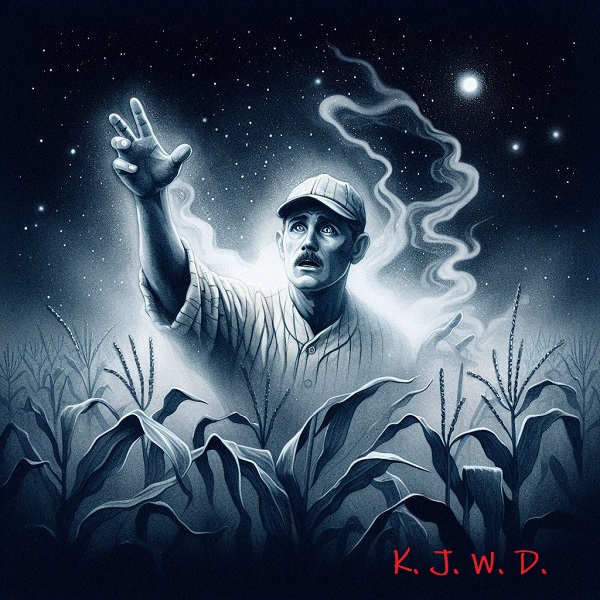
Another figure emerged from the rustling cornfield, a gaunt, hollow-eyed man with a desperate look in his eyes. He stumbled towards Ray Kinsella the farmer, his hand outstretched.

“Got a smoke, Ray?” he rasped, his voice a hoarse whisper.

The man’s desperation, his gaunt face, his eyes pleading for relief – it struck a chord deep within me. This wasn’t just a character in a movie; this was a chilling glimpse into the potential consequences of addiction.

Here, trapped in a timeless limbo, was a man forever bound to his craving, forever haunted by the ghost of nicotine. The thought sent a shiver down my spine. Was this my fate? Was I destined to spend eternity craving that fleeting, addictive supposed pleasure?

The image of the ghostly smoker, forever reaching out for a cigarette that would never come, became a powerful motivator. It was a stark reminder of the insidious nature of addiction, a warning that the consequences could extend far beyond the physical damage.

From that moment on, quitting smoking became more than just a matter of improving my health. It became a matter of escaping a potential eternity of craving. It was time to break free from the chains of addiction that threatened to bind me forever.

The journey was not easy. The cravings hit hard, unexpected waves of desire crashing over me. The ghost of nicotine, ever-present, whispered temptations in my ear, promising fleeting moments of solace. There were times when I almost succumbed, when the allure of a single cigarette seemed to outweigh the fear of eternal servitude.

But I remembered the gaunt face of the ghostly smoker, his eyes pleading for release. I remembered the chilling realization that addiction could transcend death, that the cravings could persist in a chilling, eternal limbo.

And so, I persevered. I walked more, I ate healthier, I filled my days with activities that kept my mind occupied. I sought support from friends and family, and I learned to recognize the triggers that unleashed the ghost of nicotine.

Slowly, gradually, the cravings subsided. The phantom limb twitched less frequently, the whispers grew fainter. I began to breathe easier, to sleep more soundly.

Years later, the memory of the ghostly smoker still lingers, a poignant reminder of the dangers of addiction. But now, instead of fear, it fills me with a sense of accomplishment. I have broken free from the chains that bound me, escaped the clutches of the ghost of nicotine, and reclaimed my freedom.

The ghost of addiction may still linger, a faint echo of a past I no longer recognize, but I am no longer its prisoner. I am free.


30–


Retrospect – The Pigeon War of 1952


Retrospect – The Pigeon War of 1952

By Kevin J. W. Driscoll (c) 2025

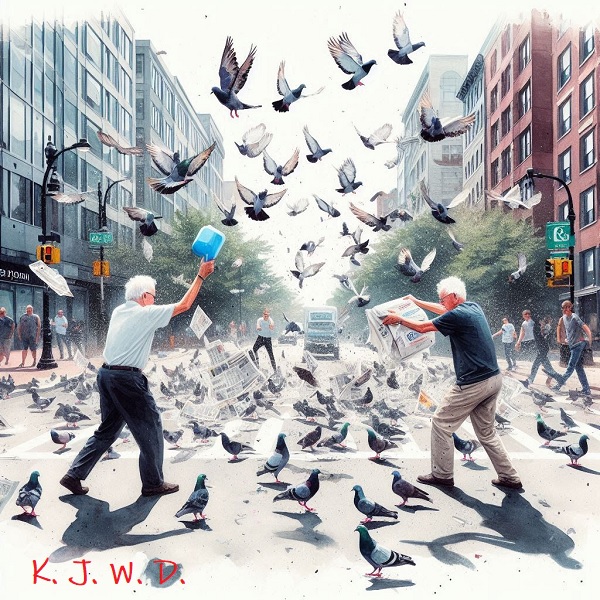
So, let me take you back to the bustling streets of Boston in 1952. My grandfather, a city boy through and through, loved to regale us with tales of his urban escapades. And none was more legendary than The Pigeon War of 1952.

“It was a crisp autumn morning,” Gramps would start, leaning back in his chair. “I was just a young buck, running errands for old Mr. Thompson, the newsstand guy on Tremont Street. He had the best spot in the city, right next to the bagel cart and across from Boston Common.”

Now, in the city, pigeons are everywhere. But back in ’52, they were more than just a nuisance—they were a menace. Mr. Thompson had been waging a losing battle against these winged rats for years. They’d steal his newspapers, dive-bomb his customers, and generally cause havoc.

“One day,” Gramps continued, “Mr. Thompson had had enough. ‘We need a plan, kid,’ he said to me. ‘These pigeons are ruining my business. It’s time to fight back.'”

Gramps and Mr. Thompson devised a scheme so elaborate, it would make a military strategist proud. They armed themselves with water balloons, slingshots, and even a makeshift pigeon trap made out of a cardboard box and some breadcrumbs.

“The first attack came at dawn,” Gramps said, his eyes sparkling with nostalgia. “Mr. Thompson and I were ready. The pigeons swooped down, thinking it was business as usual. But not this time.”

With a battle cry that echoed through the streets, they launched their counterattack. Water balloons flew, slingshots snapped, and pigeons scattered in every direction. For a brief moment, it looked like victory was theirs.

But then, the pigeons regrouped. It was like something out of a Hitchcock movie. They came back with reinforcements—dozens, maybe hundreds of them. The sky darkened with their numbers.

“We were outnumbered, outgunned, and out of water balloons,” Gramps said, shaking his head. “But we didn’t give up. We fought until the bitter end.”

In the end, the pigeons claimed victory that day. Mr. Thompson’s newsstand was a wreck, and Gramps was covered in feathers and pigeon poop. But they’d earned the respect of the neighborhood. Word of their valiant stand spread, and people came from all over to support Mr. Thompson’s newsstand, if only to hear the tale of The Pigeon War of ’52.

“And that’s how we saved the newsstand, even if we lost the battle,” Gramps would finish with a grin. “Never underestimate the power of a good story.”

Years went by, and the story of The Pigeon War of ’52 became a cherished family legend, told and retold at countless gatherings and here I am now telling it to you. My grandfather’s escapade turned into a symbol of resistance, resilience and camaraderie, a reminder that even in the face of the most ridiculous challenges, a bit of humor and determination could carry you through.


Epilogue:

As I grew older, I often walked by the spot where Mr. Thompson’s newsstand once stood. It had long since been replaced by a sleek coffee shop, but in my mind’s eye, I could still see the old man and my grandfather, battling the pigeons with water balloons and slingshots.

Whenever life threw me a curve ball, I’d think back to Gramps’s story and smile. It wasn’t just about the pigeons or the chaos—it was about facing adversity head-on, finding the humor in every situation, and when it is all over and done always having a good story to tell.

And so, the legacy of The Pigeon War of ’52 lives on, a testament to the indomitable spirit of city folk and the continued power of a well-told tale.


–30–

Sisters 2025

As I savor the feel

Of the radiating warmth

From the the flow of 

Electricity that I often

Take for granted


I think of the 

Women of Palestine

As they arise in the cold to

labor each day

As a rock in the river 

Of genocide that sweeps away 

Their children 

Lovers, husbands, sons, nephews

Sisters

Ribbonning through their hunger and thirst,

With jagged fishooks of generational trauma 

Are the currents of unstoppable fear-

The Male blood-red lust for control

And anger at a world that 

Will never give that…


Then the women of Sudan

Who bear the blackened waves of the

Men’s impotency turned 

To pain-giving thrusts of hatred 

Toward an earth who 

They feel

Never gave them 

A path forward, 

Churning and churning toward

Death and their 

Existential fear of it

through the violent 

Terror and torture of the 

sisters mothers aunties

Who birthed them, who held them

Who raised them


And the women of Afghanistan

Painfully close to the sound of freedom, 

Now hearing the demanding roars from men

To silence feminine voices that

Carry the power of the Goddess

That long abandoned the men

after the multitude of 

Rapes and attacks, 

That inconceivable lack of compassion leaves 

Bereft the women in blue enclosures

even as they 

Carry within them, the males of the next generation

Of oppression, fear and loss.


This perpetual mysterious self hatred of men,

Projected ever outward 

Despite the only love beyond love

They have experienced being in

The arms of the women who tunneled their

Pathway to the planet—

They seem to always turn in fury

On the women trying to survive

The refusal of the masculine

To reflect on its cyclic shadow

Of pain and agony


I feel paralyzed and unable to  

Attempt any sort of understanding

Of how we have become so unbalanced 

And my body so denied of its agency 

As to leave the sisters of our 

Collective body 

Dying of the perennial testosterone-fused cancer

fear

Encrusting every cell of creativity

Peace and joy

That could be

That can be

A beautiful human destiny

My sisters I pray for us

My brothers, I tentatively wait for your wisdom

To grow

In time for our survival.