
Over the River Again

I am reposting the story I wrote for the prompt “Gratitude” two years ago, with updates. I decided to do it this way, rather than just move the old story to this prompt, because this will be my 100th story! Thank you for your indulgence.

***

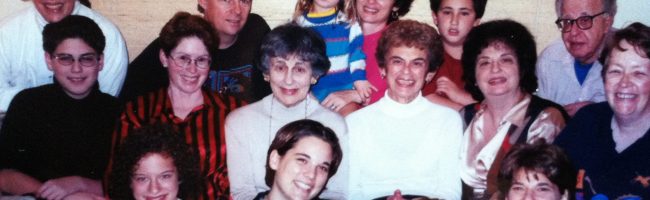
Thanksgiving was always the most special holiday in my family when I was growing up. It was the one time of the year when everyone would gather, aunts and uncles and cousins, to spend the day together, eating and talking and enjoying each other. It was the only time all year that we ate in the dining room instead of the kitchen, putting all the leaves in the table so it would seat everyone. It was also the only time we used the good dishes, a delicate Wedgwood bone china that my parents had bought on a trip to England. We would have hors d’oeuvres in the living room first. Olives, marinated mushrooms, smoked oysters, and other delicacies, with brightly colored toothpicks to spear them all. I first tasted smoked oysters as a child on Thanksgiving, and I have loved them ever since.

I’m not sure if we ever talked about politics at the dinner table. It’s possible that we did, especially during the Vietnam Era, but I don’t have any recollections about it. Even if we had, there wouldn’t have been much arguing, since we all had essentially the same political views. It may have taken my father a little longer to get to the point of thinking the war was wrong, but I know he got there, and I don’t remember any trauma related to it. The only family member with a totally different political view was my uncle Ed, who was a rabid pro-Soviet communist. In his eyes, the Soviet Union could do no wrong, to the point where he wouldn’t admit that there was any anti-Semitism there. He even went to Moscow every spring for the Mayday celebrations. But for the most part, nobody engaged in argument with him. Except for once. I was in college, taking a course about China, and totally smitten with Chinese communism, which was at odds with Soviet communism at the time. He and I had an argument about which was better. But it wasn’t at the dinner table, it must have been before or after. Neither of us convinced the other, but I don’t think there were any hard feelings.

The last of the consecutive family Thanksgivings we had, where everyone in the entire extended family showed up, was in 1977, when my niece, the first baby of the next generation, was six months old. After that it seemed to be too hard to gather everyone at that time of year. Twice thereafter my parents and sisters and I gathered at my middle sister’s house in Colorado, but it didn’t include the cousins. Two decades later, in 1999, we had one more Thanksgiving gathering of everyone, because my nephew’s bar mitzvah was that weekend, so we stuffed ourselves with turkey on Thursday and danced the horah on Saturday. Later on, during the years when my two older kids were in college on the East Coast, and it didn’t make sense to fly all the way across country for four days, they went to my oldest sister’s house in Brooklyn for the Thanksgiving vacation, and my mother was there too, and the other members of the Eastern branch, and I was very thankful that they still got to have a family Thanksgiving even if I wasn’t there.

Now my extended family gets together in the summer rather than in November, because it works better for everybody’s schedules, but I do miss having everyone together for Thanksgiving. I am thankful that two of my children still come home to Sacramento for Thanksgiving. The one who doesn’t come has a good excuse, as she lives in Spain where it isn’t even a holiday. The other two have an easy one-hour hop from LA, and this year they are even on the same flight.

***

At any time of year, I am grateful to have the family I do, both the one in which I grew up, and the one I have formed as an adult. Each member is a loving, thoughtful, intelligent person with whom I enjoy spending time. I have been particularly thankful for the last two years that we all share the same political views. I know that many of my friends have relatives who are Trump supporters even now, and I can’t imagine how that would be, and how one could have a civil conversation with them. The midterm election two weeks ago was such a relief, especially as more and more Democratic wins trickled in, and it’s nice to be able to share the elation with all of my family members. And the fact that one family member is in the forefront of the fight against Trump makes it particularly sweet!
My Family’s Ever-Changing Thanksgiving Tradition

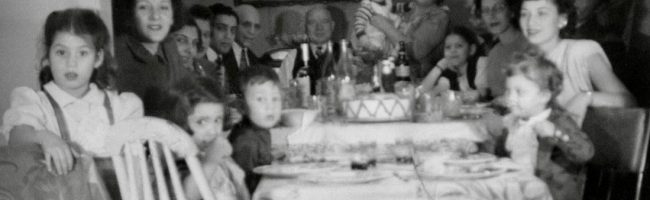
I look at this photo and sigh. This was my family’s Thanksgiving table seventy years ago. I’m the second child on the left, sharing a meal with two generations now gone. In fact, my dear cousin sitting directly across from me has also died. But the tradition of sharing a meal with folks you love is in my soul. I have had to adapt to the way this holiday evolved for me personally. No problem. I will always love Thanksgiving.

I don’t remember much about Thanksgiving as a kid except for how much I loathed that plate of jelled cranberries. If you are a person of a certain age, you know what I mean. The slices had strange grooves on the side. My father loved this delicacy, but I hated the looks of it. It was only as an adult that I learned this version of cranberry sauce came straight from the can, and that cranberries could actually be tasty if prepared differently. I have vague memories of growing up celebrating the Thanksgiving in the photo with my siblings, parents, aunts, uncles, cousins, and grandparents. There must have been some system of deciding which side of the family would be invited which year, as both sides lived in the Detroit area. Of course, we ate turkey, stuffing, and pumpkin pie. And that mushy green bean casserole with onion rings. My father never had the patience to carve the turkey at the table, so that task was delegated to the women folk preparing the meal. I know, not very Norman Rockwell.

The Thanksgiving of my daughter’s birth definitely gave new meaning to this holiday for me. My parents spent the day with my young son, my husband, and me staring at my belly. I was “overdue” and not in a great mood. I have no memory of what we did to celebrate that Thanksgiving, but I banished my parents by the end of the weekend. Thanksgiving was early that year, November 22. They left November 25, and my daughter was born November 26. Yes, I was a jerk. They literally turned around and came back from Michigan to care for my two-year-old.

The year of 40 guests!

After that year, Thanksgiving (combined with my daughter’s birthday celebration) was all mine, and for 45 years, I have hosted it in various evolving iterations. My husband’s ever-expanding family lived in town, so they always came. My parents came every year as well. For a time, my siblings and eventually their wives drove in from Michigan. Years passed and the turkey carving honors were delegated to my husband – still done in the kitchen just as his mother taught him. By this time, my brothers had kids and splintered off to celebrate with their own families in Michigan Still, the numbers grew and grew. The Thanksgiving/birthday celebration had become overwhelming. I was squeezing three tables into my home to accommodate up to 40 guests. I knew my relationship with Thanksgiving was in trouble. It was time for family counseling, as a divorce from this holiday was inevitable. My kids were now married and having kids. It was just too much.

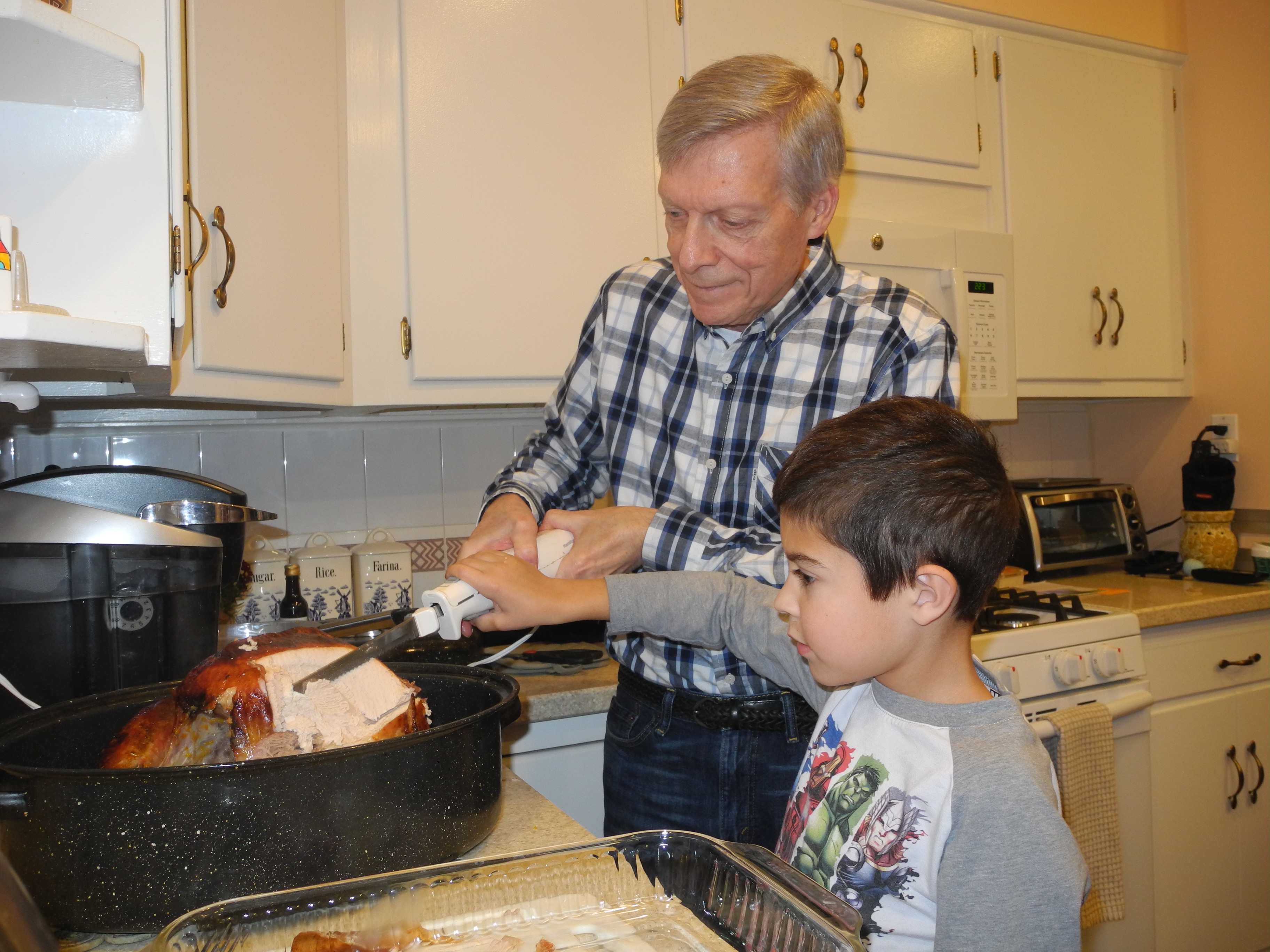
Thus, Thanksgiving evolved once again. My mother-in-law and my parents died, my husband’s side of our family broke into smaller units to celebrate, and in recent years my husband and I gathered with two of my kids, and their families. And my grandson asked to help carve the turkey.

This year, we regroup again, as my younger daughter and her kids will be joining her new husband’s family and we will have to alternate years. We will still celebrate my daughter’s birthday with her family of five, a small Thanksgiving gathering. Despite this, my Thanksgiving menu leaves little room for creativity. No matter how many people come, I feel obliged to make everyone’s favorites. Of course, there are the turkey, dressing, fresh cranberries, vegetables, and pumpkin pie. But I also need entrees for vegetarians and my fussy grandkids who will not eat most of these traditional foods. And we will have to figure out who will carve this year’s turkey. It may be time for one of my granddaughters to serve as sous chef.

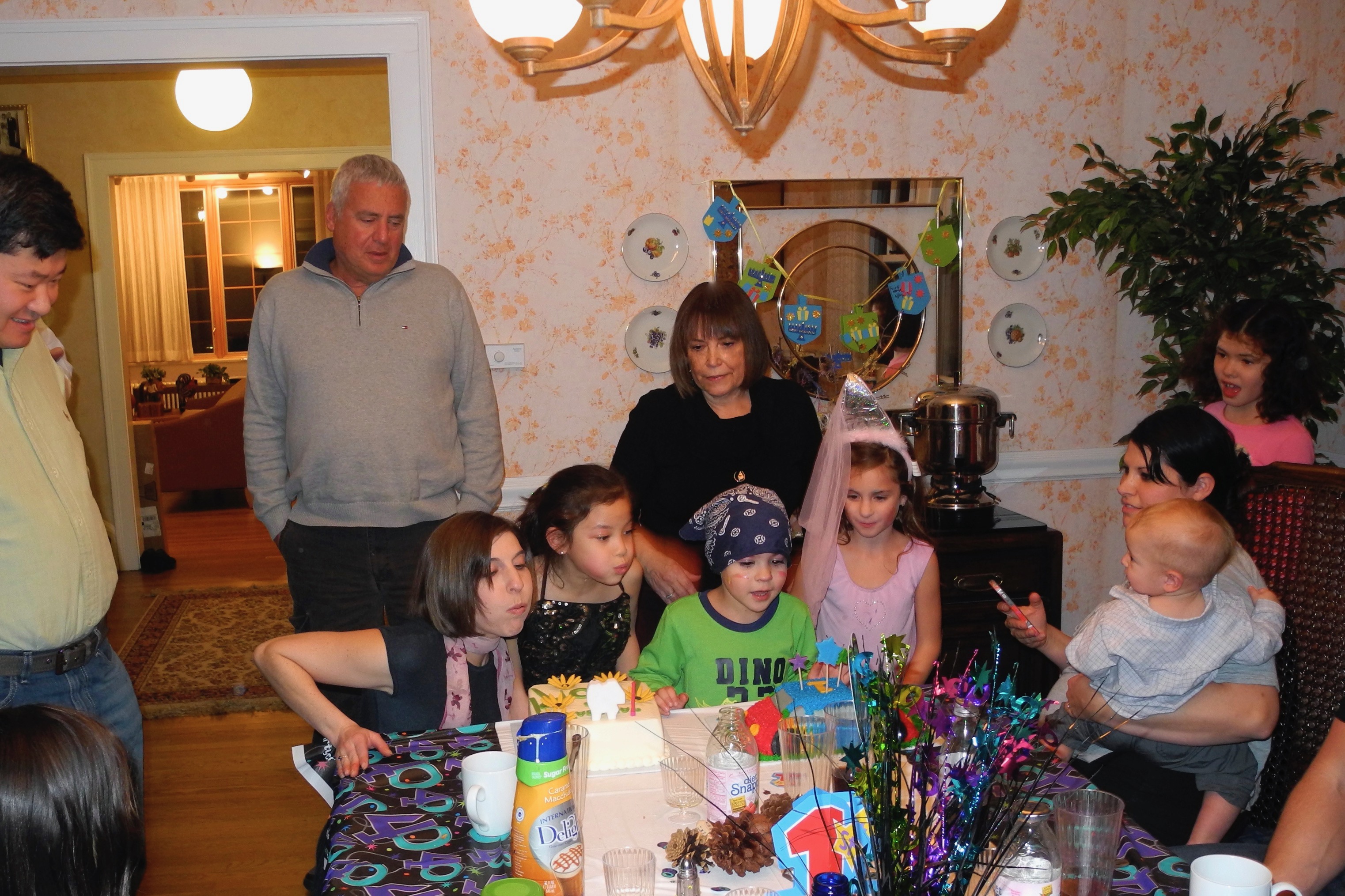
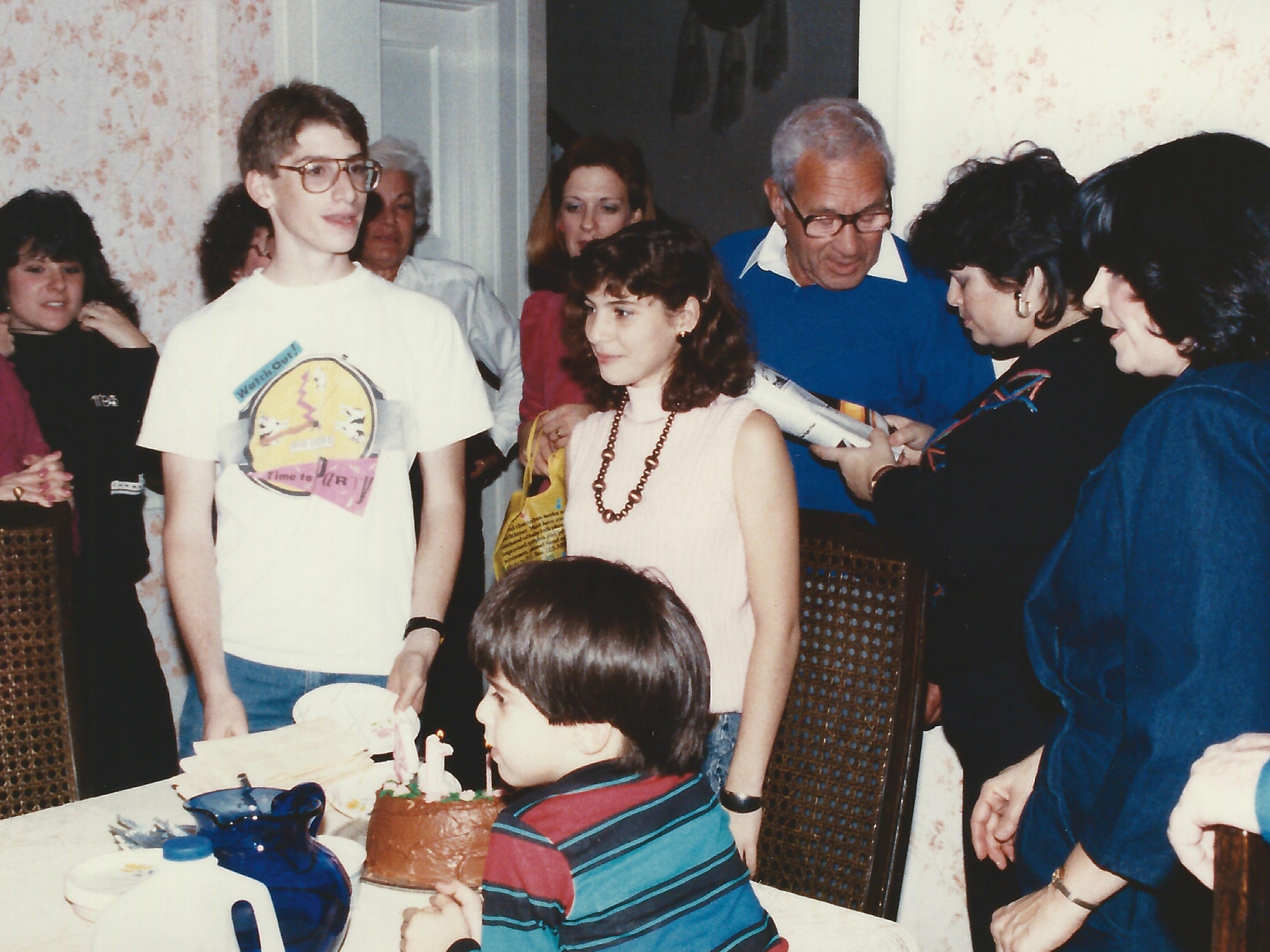
Some of the grandkids and family back in 2013

The way I visualize my ever-changing Thanksgiving configurations is like cell division. As family ages and grows, smaller cells split off. You remember those pictures of mitosis in which blobby parent cells pull apart to create two cells. Eventually, there are many cells gathering around tables. Like me, I hope they both create their own traditions and carry warm memories of past gatherings to remind them of what really matters and why they should be thankful.

I invite you to read my book Terribly Strange and Wonderfully Real and join my Facebook community.

Gates of Eden: the genesis of an antiwar novel*


My antiwar writing began in a theater. I was working on a new play and the antiwar movement of the 1960s came up in conversation. Several of the actors expressed amazement that there had been a determined movement to stop the war. One actor said something like “Wow! We just thought that all you guys did was smoke dope, get laid, and, like, drop out.” I felt my jaw clench and the veins on my neck popped into high relief.

I had already read much of the powerful library of fiction that came from Vietnamese and American soldiers who had fought each other and lived to tell the tale. But what about the war against the war? There was very little literature about the resistance.

I was aware that the accomplishments of the antiwar movement had been eroded by a booming corporate culture that had no time for the past and no room for resistance. And the actors’ ignorance about the antiwar movement reflected a long-term de-education of recent history. The Vietnam war demanded less each year in the nation’s history texts and television empowered law and order. Still, I was shocked by their response to the most powerful liberation movement in U.S. history. They didn’t even know it had happened! I decided to set the record straight.

I wanted to write about the resistance’s impact on the war, about the triumphs of feminism and environmentalism. We had broken the stranglehold on what was being taught at universities, demanded black and Chicano studies programs, womens’ studies. We had redefined the contemporary university as research and profit factories where students and faculty served as workers. With most of the rank and file faculty at our side, we had changed the curriculum!

I wanted to talk about all of that… and more! And so I sat down to write Gates of Eden, an episodic novel named after Bob Dylan’s stark song of corruption and decay. I felt that the resistance chose to stand outside the gates of Eden in defiance of a materialistic nation that called itself paradise while millions of Americans lived in poverty and while our leaders bombed a nation of farmers back to the Stone Age.

I wanted to portray the antiwar movement through the novel’s characters — their actions, their struggles, hopes and fears. Although there was plenty of sex, drugs, and rock and roll in those days, I didn’t set the story at rock concerts, or smoke-ins, or orgies. Nothing wrong with any of those things, but I drew from my friends’ and my own experiences as we became aware of two Americas — the gap between poverty and wealth, the connection between racism, the economy, and who was drafted to fight the Vietnam war.

Gates’ characters I modeled on those who planned and marched at gigantic protests and demonstrations. They devoured life in bedrooms and ratty movement offices connected by FBI-tapped phones and stinking of mimeograph ink. They gathered in universities, collectives, communes, on city streets, and broadcast their positions in underground newspapers. They weren’t hippies, rock stars, or dropouts. They were artists, writers, street fighters, Viet vets, free thinkers, strategists, lost kids, people who took a look at what was going down and picked up the gauntlet to resist. To rebel. And, of course, to love. They told a different story.

I also wanted to counter misconceptions about the antiwar movement promulgated by popular culture. I think most people knew about the 1960s from films. “Easy Rider,” “Running on Empty,” “The Big Chill”… These were made by people who were building their careers, not fighting The Man.

Granted, many of these artists were talented and well-positioned to make their films. But without having been there — in the streets, in the ratty Movement offices, in the jails, in the free stores, on the communes and collectives with nothing but spaghetti to eat — their stories lacked authenticity. Often – like “Running on Empty” — they echoed the mission of the establishment — to revise, belittle, and to render impotent the real power and success of the antiwar movement.

Gates’ first outline included everything from the origins of the civil rights movement to the Cuban Revolution to People’s Park and every person, place, and anecdote in between. I knew I had to narrow the field. But I had become re-obsessed with the huge tapestry of the 60s, with my own recollections and the people, places, and events of the time. I had to turn this historical laundry list into a human, character-driven drama, get rid of my own, preachy didacticism and let my characters tell their stories. And I had to tell it like it really was, not like the mainstream portrayals.

At the same time, a lot of people didn’t know much about the war, the antiwar movement, and its impact. I couldn’t just ignore history. Instead, I set out to carry it through the characters’ actions, words, and conflicts. I also added “Masters of War” chapters where readers get to spy on the power brokers, the men who made the decisions to continue the colonial war in Vietnam, to escalate it, and make it look like a war worth waging.

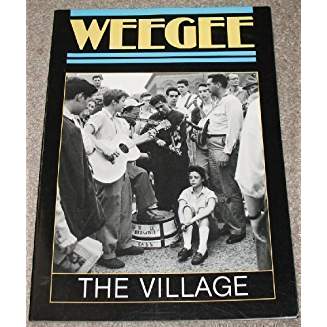
None of these characters are me. Or any of my friends. They’re all hybrids whose characters grew as I wrote. Some faded while others wouldn’t shut up. Madeline, for example, a young Greenwich Village poetess, jumped out of a Weegee photograph I was using to set a folk music scene in Washington Square Park. She just wouldn’t sit still and she wouldn’t shut up, so she became one of Gates’ major protagonists. I invented other characters because I wanted to represent the diversity of the movement, from returning, radicalized vets to COINTELPRO spies and conservative parents.

As I wrote, I hoped Gates would be an exciting book. Certainly, a lot of love, research, imagination, and hard work went into telling a largely untold tale. And, as with all novels, I hoped Gates would transport its readers into a different landscape so gripping and powerful and so delicious that they would make the journey from beginning to end.

#  #  #


*Adapted from an interview conducted on Pacifica Radio.