

The summer of 1961, the place—the Federal Justice Building in Connecticut, the courtroom for hearings before the Selective Service hearing officer, me.
By refusing to accept the legitimacy of the draft, I received a federal order to appear before a judge who would accept my refusal or punish me with a two-year prison sentence for illegally avoiding the draft.
Months before the FBI my argument questioned my position as a Jewish conscientious objector. Was my Jewish defense adequate to avoid the draft based on my faith?
The judge began the inquisition by challenging my Jewish beliefs. He said, “The Bible is full of stories of warfare.” Certain that he was ignorant of Judaism, I pointed out that the Levites were exempt from military service, the Mishnah did not glorify war, and exemplary Jewish Rabbis, and philosophers, such as Martin Buber promoted pacifism.
Then he used the seemingly “gotcha” argument. “Would you have joined the war against Hitler?”
This question tried to undermine me either as a Jew who did not care about genocide, or a closet an antiwar Marxist. I defended myself from the first assumption, and remained silent on the second, fully aware it was a trap.
I explained that the strategy and purpose of the Allies was not to save the Jews. The first two years of the war
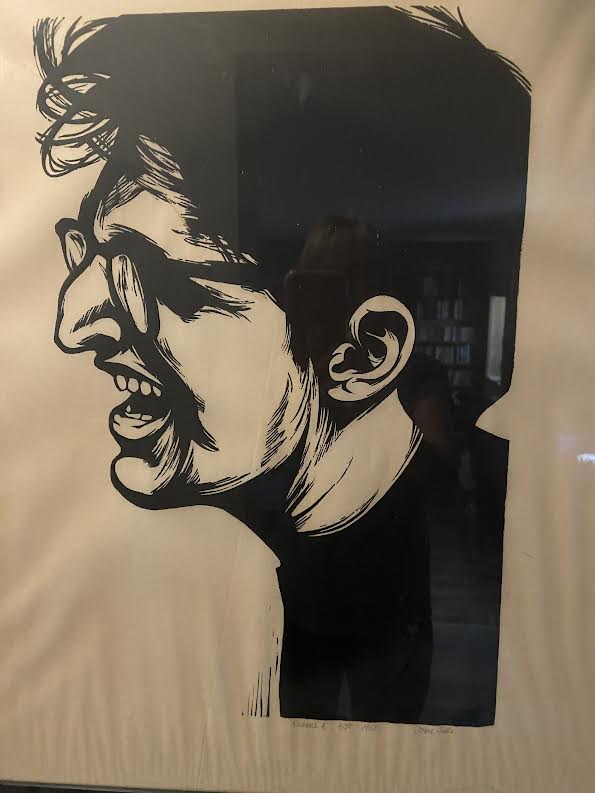
A portrait of me from my anti-war days
did not attempt to rescue the Jewish population. The military and State Department even sealed or concealed reports on genocide. They refused to destroy the train tracks that conveyed Jews, among others, to their death in the camps. After the war, ex Nazis received government and economic posts in Europe, but there scant Jews in high policy positions. The main support of the survivors was to support them in the exodus to Israel and the establishment of a Jewish state outside Europe.
I did not take the bait of providing a Marxist argument. Namely the war was between two capitalist systems. Victory for either one would not bring either peace or justice to minorities, especially African Americans, Jews, and women. The Soviet’s loss of life of twenty plus million was the major effort and sacrifice against Hitler. American post war policies threatened the safety of the Soviet Union. Rather than forcing Germany to pay adequate reparations to the Soviet Union, Europe supported the revival of Germany with the argument that this was necessary to contain Russia. American Marxists argued that Europe had regularly invaded the country: Napoleonic, Crimean War, the White Russian uprising, and recently the threats from NATO. Russian socialism with its emphasis on equality, social justice, anti-capitalism, and anti-colonialism provided an alternative to Western hegemony, hypocrisy, and wars against the working class and the western imperialism.
The Hearing officer spent further time pestering me. A month later, I received his decision. The negative FBI report had diluted my appeal. But since I was on Pre-med track in college, he gave me the option to be a non combatant medic.
I refused this compromise. The position was still under military authority.
Consequently, a year later my appeal to the California State Board of Selective Service Appeals decided I was truly a conscientious objector, ordering a two-year commitment to community service.
However, my local board in Los Angeles had the final say. They determined I was unfit to serve in any capacity. They did not want me to take advantage of the conscientious objection status. So, they officially labeled me as a 4-F reject. I was physically, mentally, and morally unfit to serve in the U.S. armed forces.
For the next forty years I threw myself into antiwar movements. I establish friendships with such leaders s as Noam Chomsky, Howard Zinn, antiwar movements such as the Committee of Concerned Asian Scholars, and the American Friends Service Committee.
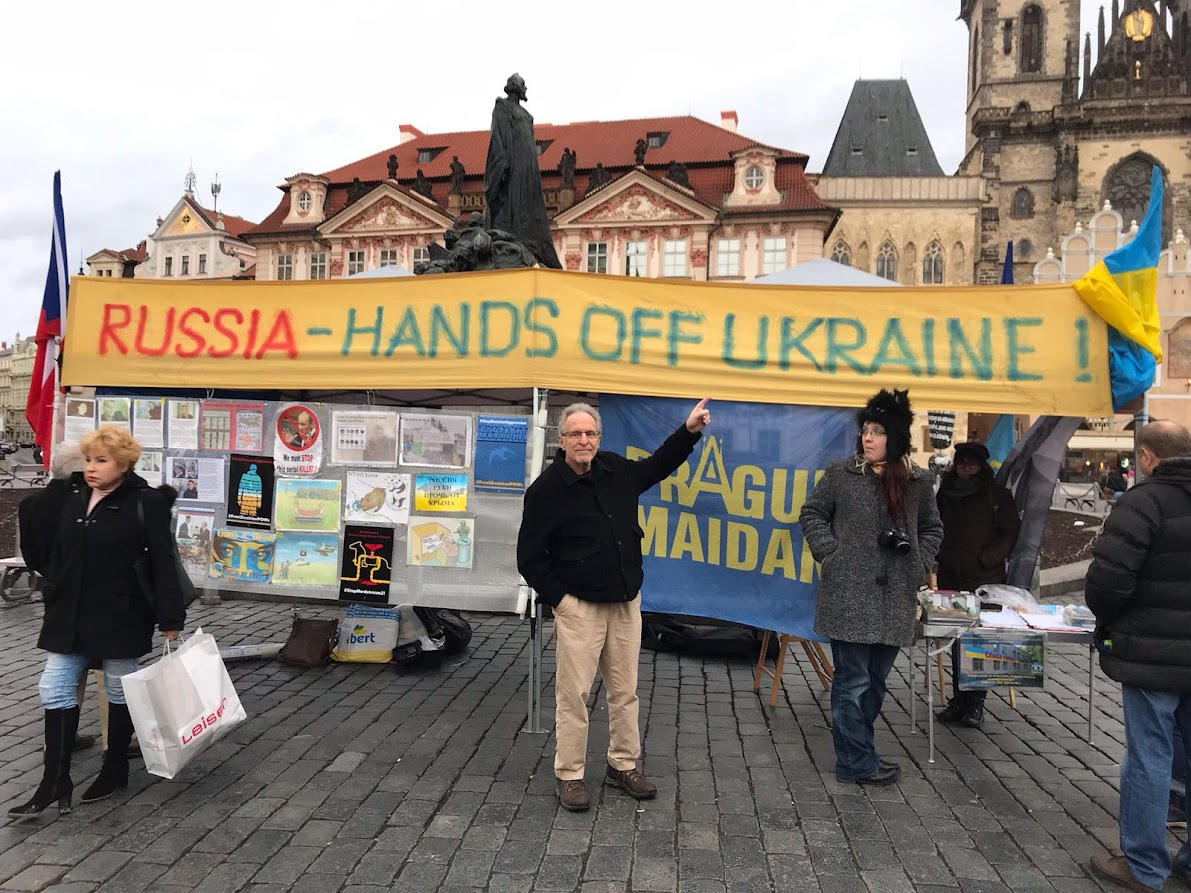
In Prague in 2019
But in 2014, during Russia’s claim to Crimea, I actively favored political and military policies in favor of Ukraine. I opposed the pacifist and left socialist support for Russia to maintain its occupation of Crimea and southern Ukraine.
During my trip to the Czech Republic in 2019, I demonstrated in Prague for solidarity against Russian threats to Ukraine.
If I were 20 years old today, I would find a way to support the Ukrainians. I would even enlist to become a medic!