
And That’s the Way It Is … Or Was

My first memory of broadcast news is the image of my mother madly ironing while watching something on television that clearly angered her, the Army-McCarthy hearings. I was just a kid and thus she never explained to me why she kept watching this when it was clearly upsetting her. I guess my grandkids could wonder the same thing about me as I can’t stop watching the House January 6 Committee Hearings. Like my mother, I am clearly distressed and yet I can’t look away.
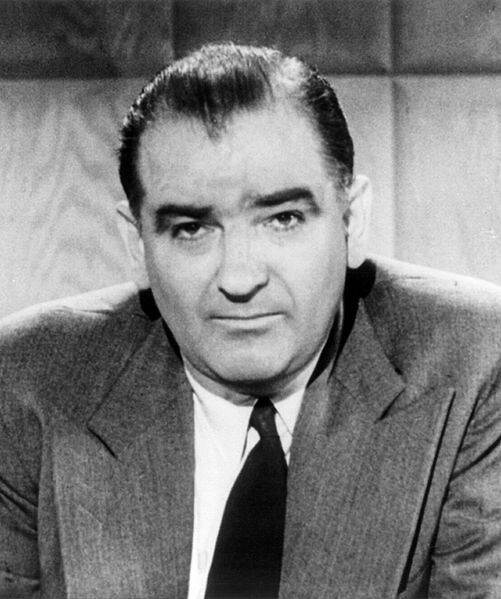
My mother’s villain, Joseph McCarthy

Of course, the huge difference between these two broadcasts is that I can choose to watch the January 6 hearings on any cable network, so I choose one on which I know the commentary will agree with my assessment. Also, I can record the hearings if it is inconvenient to view them live and watch recaps over and over. So, unlike my mother, I can be upset 24/7 if I choose.
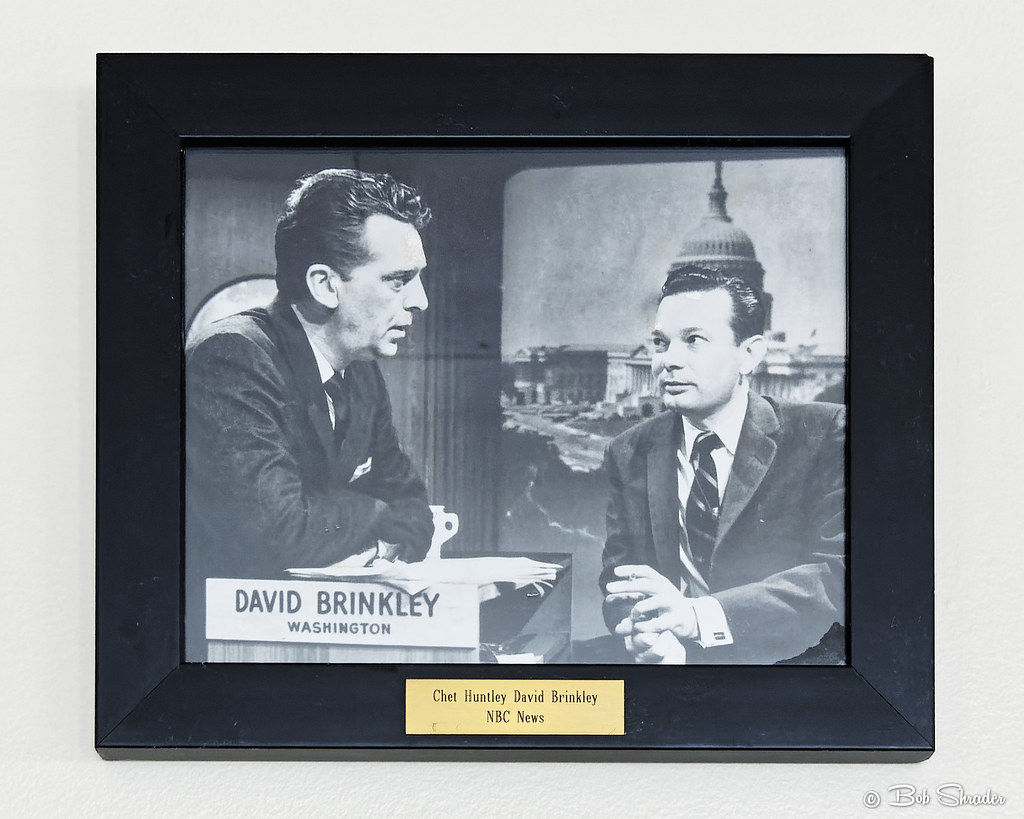
They wished each other “goodnight”

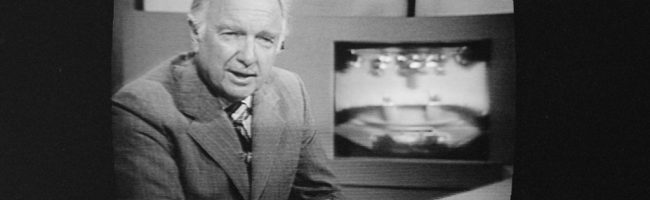
My parents always watched the evening news. I’m guessing they were fans of The Huntley–Brinkley Report that aired on NBC beginning in 1956. Even though I watched that on occasion, the broadcast news I remember best came from Walter Cronkite on CBS, once dubbed “the most trusted man in America.” For 19 years, from 1962 to 1981, he was the person I turned to deliver the news. Like many of us, I especially remember the newscast in which he told me President Kennedy had died. When he removed his famous dark-rimmed glasses to wipe his eyes, I dissolved into a flood of tears.

Until 1968, Walter Cronkite shared what the government wanted us to know about the war in Vietnam, but I was already firmly in the camp of total opposition. Because I respected Cronkite, I was thrilled when he delivered what came to be called “the Cronkite Moment” during a broadcast following his trip to Vietnam to cover the war, and the Tet Offensive.

At the close of his broadcast, Cronkite warned viewers that he was about to share his opinion rather than the traditional “objective” news. “It seems now more certain than ever that the bloody experience of Vietnam is to end in a stalemate . . . It is increasingly clear to this reporter that the only rational way out then will be to negotiate, not as victors, but as an honorable people who lived up to their pledge to defend democracy, and did the best they could.”

This statement made anti-war sentiment mainstream and was a first step toward the media shaping the opinions of its viewers rather than just towing the party line. For me, it affirmed what I believed about the war and, at the time, I appreciated Cronkite telling the public that this war was a huge mistake and not winnable.

For years, my husband and I watched the Ten O’clock Nightly News with local co-anchors Walter Jacobson and Bill Kurtis to get a recap of what was happening and to hear the local sports and weather forecast. I used to exercise to the beginning of the Today Show because its first 20 minutes were commercial free. Fast forward to more recent times with the growth of cable “news,” which is much more opinion than news. I had a brief addiction to Morning Joe even though I didn’t agree with most of Scarborough’s opinions. He was on at a convenient time so I could exercise before going to work, and he often inspired blog posts.
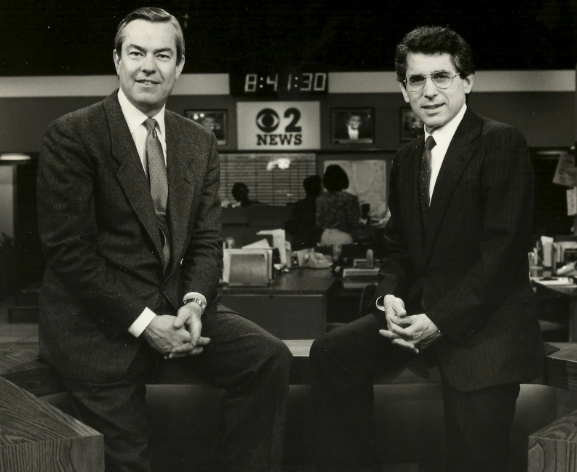
Bill Kurtis and Walter Jacobson, photo by Robert Feder

Next, I recorded Rachel Maddow (before she switched to Mondays only). More recently, I have worked out to All In with Chris Hayes, which I like even more because he is intelligent and thoughtful without some of Rachel’s schtick. I could fall down a rabbit hole and spend most of the day switching between CNN and MSNBC, but the news is too depressing to watch the same stories over and over.

When my mother was 90 and living on her own, my brother introduced her to MSNBC. She was hooked but found the news so distressing that I told her to find something else to fill her days and finally asked my brother to cut her off. Now, I fear I could easily become my mother, watching endless coverage of the January 6 Hearings. I try PBS for a less biased version of the news, but I can’t bring myself to watch Fox to see what the other side thinks. I really don’t care, and that’s the way it is.

 

The Name Game

My name is Risa. That’s R-I-S-A.
When I was growing up, I was the only Risa I had ever heard of.
Surrounded by a gaggle of girls named Karen, Kathy, Linda, Carol, Nancy, and Diane, I was one of a kind. I got used to fielding the comments and questions:
No, it’s not short for anything.
Not Tuh-risa – just Risa.
I know what it means in Spanish and Latin.
 Like Lisa, with an R, OK?
Repeat, repeat, repeat. . .
My mother told me she made up my name. Then she told me I was named after an opera singer from the Bronx.

Risë Stevens, an opera singer who was quite well known in the 1940s and ’50 s, spelled her name R-i-s-e with a diaeresis over the e so no one would call her Rise by mistake. I wonder how many times people said, “Yo, Rise— what’s with the dots?”

The original: Saucy

Just about every Risa born during Ms. Stevens’ era can point to her as the original. She was talented and beautiful, and her Carmen was once described as “saucy.” A worthy namesake.

Lately, Risas are on the rise. There’s a casting agent whose name rolls past almost too quickly in movie credits. I have met four Risas who live near me in California and one who lives in New York.

A Risa in LA was named after me. And several years ago, a couple in my neighborhood named their baby Risa. We were Big Risa and Little Risa for a while until we both thought better of it. We Risas don’t like to stick with things when they are no longer cool.

A few years ago, I introduced myself to someone who told me that a Risa he knew belonged to the The Reesa Society. “The what?” I asked him. He said there is a society for people named Risa, no matter how it’s spelled.

So I checked out the web site, and printed my very own certificate of membership. There were so many comments on the site that the host stopped accepting new ones in 2003.  The grand originator, the inspiration to mothers all over America in the 1950s, the anthropological Lucy to all of us, Risë Stevens the opera singer herself, had signed up as a member.  She passed away recently at the age of 99. Saucy and long-lived: a worthy goal.

With my certificate of membership, I am now part of a sisterhood with a shared history and a built-in understanding of what it’s like to have such a fuss made over a simple name like ours. My fellow Risas are a font of information. Where else would I have learned about the Reesa character on Seinfeld, and Star Trek’s planet Risa, the “infamously lush resort planet, renowned for its breezes and easy-going sexuality, host to millions each year.” I wonder if Risë Stevens ever heard about this. Makes saucy sound kind of weak.

A couple of the Risas I read about had gone through a period where they gave up and just answered to Lisa or Rita or Theresa or whatever. I used to toy with the idea myself when I was younger, but I actually liked having a name that was different, even if I had to go through the questions and the spelling every time I was introduced to someone.We Risas like to be addressed correctly. As one member of the Reesa Society wrote: “Everyone wants to pronounce it wrong. Then they tell you it is the prettiest name they have ever heard.” We laugh, because Risa means  laugh or laughter in Spanish, as I have been told so many times.

It still makes me stop in my tracks when I see my name in print, though. We are often literary people, and take notice on the rare occasion an author shows the grace and sensitivity to name a character Risa. And thank you, Michael Chabon, for the mention. (The Yiddish Policeman’s Union, pg. 265)

I find it comforting to know there are more of us in the world than I ever imagined, and according to the Reesa Society website, we are not all named after the same person, we are not all descended from Russian Jews, and no one ever uses those whaddya call ‘em dots over the e anymore. As far as I am concerned, mine is the only correct spelling, but we Risas are a tolerant group and welcome the double ee’s, the double ss’s and even the occasional extra “h”.

Nicknames are an issue, though. You can only shorten a four letter word so much. A few people like to call me “Ris,” but it looks funny when you  write it R-i-s, and if it’s R-e-e-s-e, then that’s longer than my actual name.  Old Brooklyn Dodgers fans might have been tempted to call me “Pee Wee Reese” back in the day, but it would be an unseemly nickname for someone who prefers to be thought of as “saucy.”

Then there was the whole  Rhesus monkey thing in elementary school.

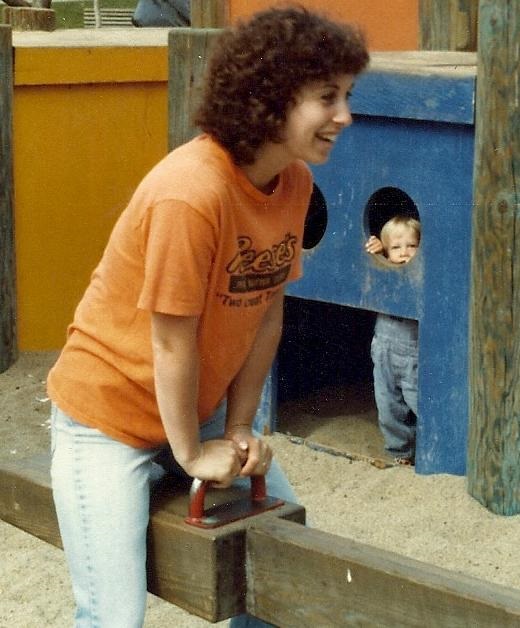
Some joker gave me a Reese’s Pieces t-shirt once upon a time. It was bright orange and also sported the slogan “Two Great Tastes.” I wore it proudly, especially when I was nursing my youngest child.

We Risas are able to take a joke, even when it has to do with something as closely tied to our self-esteem and our feelings as our very own special name, which, as you know by now, means “laughter.”

There will never be things with my name on them hanging on those racks  you see in toy stores. I think about the young Risas of today with no little license plates, no toothbrushes or barrettes. To them I say: suck it up! We are saucy, confident, and proud. We don’t need no stinkin’ barrettes! Say it loud and spell it clearly. Over and over again.

And remember to smile when you say: Hello, My name is Risa!

My Old Valiant

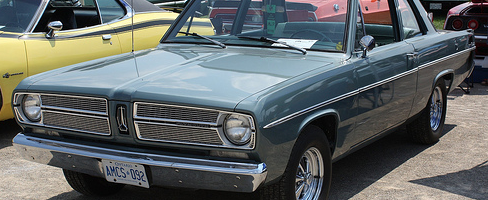
I needed a car my senior year at Brandeis, as I would be student teaching at a local public high school first semester. My parents arranged to “sell” me (for one dollar) my mother’s seven year old Valiant (similar to the car in the above photo). Dan, my steady beau, flew out to Detroit to help me drive it back to Waltham.

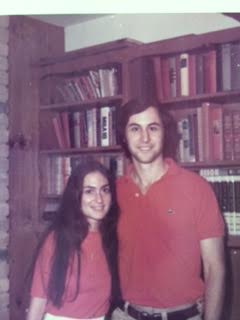
1973, in my Huntington Woods house before driving back to school

The car was already old, but I was thrilled to have it; my first car. It didn’t have power anything besides steering. No A/C, but at least it was road-worthy at the time. When Dan graduated a few months earlier, he had taken out a loan and purchased a Toyota Corolla 5-speed that I couldn’t drive. I did not yet know how to drive a stick-shift. I also knew nothing about caring for a car. We didn’t think about oil changes or snow tires or anything else to help keep my car on the road. We lived in an apartment complex (then a condominium complex) with outdoor parking only.

Dan and I married right after I graduated and we settled in an apartment in Waltham, then, two years later, bought a condo in Acton, quite a long drive for both of us, as I worked in Waltham (a half hour drive) and he worked in Cambridge (at least 45 minutes, maybe longer, depending on traffic).

At some point, the knob that controlled the heat fell off and was lost. I could no longer turn the heat on and the winters in New England are cold. The car also leaked oil like crazy. I passed a Shell Station on my way to work each day. My joke – always – was, “fill up the oil and check the gas”. But it wasn’t funny. No one had thought to tell us that we should be doing more to keep the car running smoothly and now it needed a gasket job.

The guy at the gas station (those were the days when stations also had repair shops) also informed me that I could replace the knob easily and get heat again. Miraculous! So that go fixed. But before I could give up the car for that gasket repair, I rear-ended someone at a stop light on Rt 2 in Acton in October, 1977. I wasn’t paying attention; lost in thought. We had seat belts in those days, but no shoulder belts and my teeth went through my lips when my face hit the steering wheel. An ambulance took me to the hospital for stitches, the car was totaled. It was 10 years old and not worth much.

I hastily bought a VW Rabbit with front-wheel drive, much better-suited to the winters.

We keep our cars a long time. With all the bells and whistles on them, when something goes wrong, it can be very costly and then it can be time to trade it in. We always do the routine maintenance (we learned our lesson after that Valiant) and do very little driving these days. Mostly back and forth to the Vineyard, 90 miles each way. Other than that, it is local errands, just a few miles running around town. Though Dan has a fancy car, he likes to put the mileage on my less expensive car, so drives it all the time when we are together.

So far, so good, though just a few weeks ago, the lock button on the front passenger door of my car started to rattle. The only thing I can do to make it stop is push it down manually. Dan thinks my car is still under warranty for a few more months. I hope so. They may have to take the whole door apart. This could be the start of a big repair…