

The first poem I remember from my childhood is Henry Wadsworth Longfellow’s The Midnight Ride of Paul Revere. I memorized it when I was young to impress my father, who was a huge history buff. Not a great poem, but I still remember some of it:
Listen, my children, and you shall hear
Of the midnight ride of Paul Revere,
On the eighteenth of April, in Seventy-Five:
Hardly a man is now alive
Who remembers that famous day and year.
I could probably go on a bit longer from memory, but it has fourteen stanzas. That’s a lot for any kid to recite, even one desperate for her father’s approval.
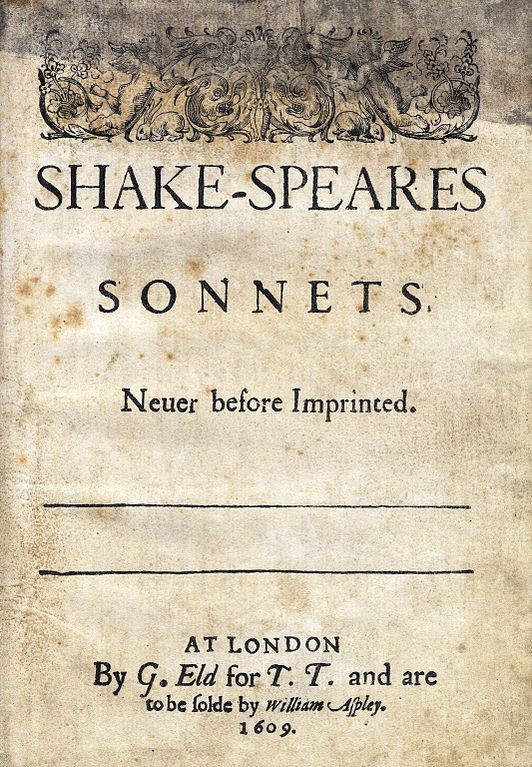
I have to credit my high school English teacher, Miss Young, with instilling a love of poetry in me. I so clearly remember her assigning our class to memorize and recite a Shakespearean sonnet. I joined the others in moaning and complaining. What’s the point of doing that? Miss Young wisely replied that once we had learned it, we would have it forever. And she was right. I can still recite Sonnet 116. In fact, here it is from memory, some 57 years later:
Let me not to the marriage of true minds
Admit impediments. Love is not love
Which alters when it alteration finds,
Or bends with the remover to remove.
O no. It is an ever-fixed mark
That looks on tempests and is never shaken;
It is the star to every wandering bark,
Whose worth’s unknown, although his height be taken.
Love’s not Time’s fool, though rosy lips and cheeks
Within his bending sickle’s compass come;
Love alters not with his brief hours and weeks,
But bears it out even to the edge of doom.
If this be error and upon me proved,
I never writ, nor no man ever loved.
Miss Young probably influenced me to major in English at the University of Michigan. So off I went with my head filled with the poetry I loved so much as a teen. I especially favored the Romantic poets. How could anyone not adore the beautiful imagery of William Wordsworth’s Daffodils:
I wandered lonely as a cloud
That floats on high o’er vales and hills,
When all at once I saw a crowd,
A host, of golden daffodils…They flash upon that inward eye
Which is the bliss of solitude;
And then my heart with pleasure fills,
And dances with the daffodils.
Like Wordsworth’s, my heart also “leapt up when I beheld a rainbow in the sky.” I thrilled to William Blake’s “Tyger, Tyger burning bright” and was wowed by Lord Byron’s description of his love…
She walks in beauty, like the night
Of cloudless climes and starry skies;
And all that’s best of dark and bright
Meet in her aspect and her eyes;
Shelley’s Ozymandias was another beloved poem. I imagined the sand in which “half sunk, a shattered visage lies,” and the admired the wise sculptor whose hand mocked the great king Ozymandias by writing on the pedestal of his statue that we should look at all he created and despair. When I read the last lines of the poem, I pondered the transient nature of power and fame:
Of that colossal wreck, boundless and bare
The lone and level sands stretch far away.
Of course, English was a highly impractical major, so I also earned a teaching certificate to “fall back on,” as my mother recommended. And fall back on it I did, teaching high school English from 1967 to 1971. As you may recall, those were turbulent years in which students questioned the relevance of poets like Emily Dickenson, Robert Frost, E.E. Cummings, Langston Hughes, Walt Whitman, Elizabeth Barrett Browning, John Donne, Y.B. Yeats, T.S. Eliot, John Milton, Carl Sandburg, Chaucer, Robert Burns, Emily Bronte, and Dylan Thomas to name a few. The war in Vietnam was threatening to swallow up their lives, so no, my students didn’t care much about iambic pentameter and other rhythms or whether the rhyme schemes were ABBA or ABAB. Figures of speech (remember alliteration, assonance, consonance, personification, metaphor, and simile?) or the imagery and meaning of those great poets bored them to tears. There was no way I could pull a Miss Young and make them memorize a Shakespearean sonnet. I couldn’t even get them to read one.
Being a newbie teacher, I concluded it would be easier to meet them where they were at and then try to teach them about the elements of poetry. Thus, we turned to song lyrics of Paul Simon, Leonard Cohen, Bob Dylan, and a host of other popular singer/songwriters of that era. I remember using Sounds of Silence extensively to teach my poetry unit. Yes, I know, not the same as a Shakespearean sonnet, but at least my students were willing to think and learn.
After I stopped teaching English and had three kids, my love for poetry morphed into Shel Silverstein, A.A. Milne, Robert Lewis Stevenson, Lewis Carrol, and assorted nursery rhymes. They loved Lear’s The Owl and the Pussy-Cat and I loved to read to my children. I defaulted to good old Paul Revere’s Midnight Ride as well. When the kids grew up, I transferred my love of children’s poetry to my career in early childhood education.
Then I retired and poetry dropped out of my life. I was writing a book, learning to blog, and reading more than ever. Just not poetry. But writing this prompted me to remember how much poetry meant to me over the years and to rediscover the poetry written in my heart.
I invite you to read my book Terribly Strange and Wonderfully Real and join my Facebook community.