The best story I ever heard came from a friend.
Read More
Scamming the Scammer




The best story I ever heard came from a friend.
Read More
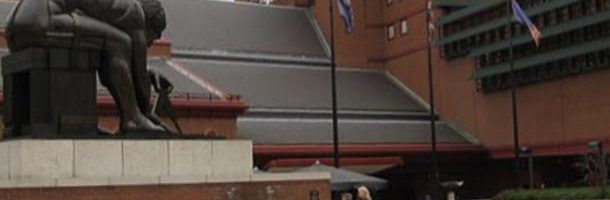
David took a job with Google DeepMind and moved to London in January, 2015. Google put him up in a two bedroom apartment for two months while he looked for a place of his own. Not wanting to let the second bedroom go a-begging, we went to visit the next month. It had been a long time since we visited London, but Dan didn’t want to see the regular tourist attractions and I sought advise from Cousin Sue and my London cousins. One suggestion was the Treasure Room of the British Library.
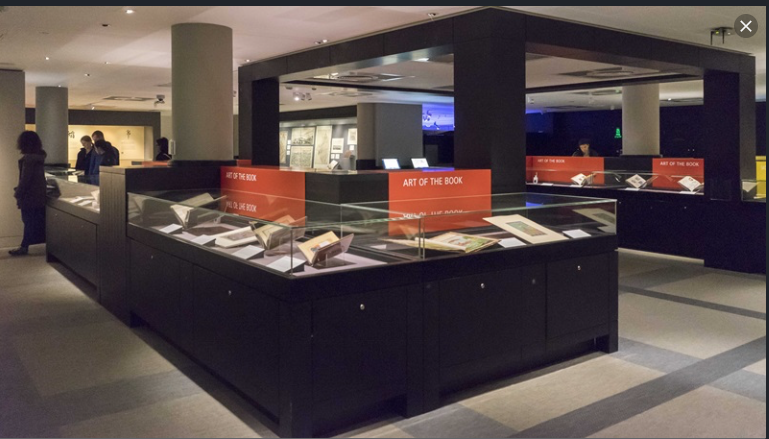
The British Library, separated from the British Museum in 1973, is a huge research and lending library, but also has a spectacular display of works on paper (or parchment) in a climate-controlled setting; wondrous, rare, world-famous works. We didn’t quite know the depth and breadth of the collection when we entered the room.
Dan ambled off, but David and I stuck together and commented on various objects as we wandered through, adding to our delight. We went straight for the Magna Carta, perhaps the most significant document in British history, it was forced on unpopular King John by his barons, granting them certain rights, but is considered to be the basis for the Massachusetts Constitution, written by John Adams and a precursor to the US Constitution. As such, is the first civil code of written laws. There are four copies in existence, two held by the British Library. I had actually seen a copy in 2014 at the Boston MFA in a small but meaningful display when it came on tour through the US. It is not an impressive-looking document; it is a small piece of parchment written in Latin, the ink faded. But I was overwhelmed with the import of its meaning, as were others at the MFA, lined up that day to see it. In fact, we were in awe of the power of the word to convey the law. It is good to reflect on that today with a president who seems to think the law does not apply to him. David and I were equally impressed looking at it that day, now more than four years ago.
We moved one space to the right and I found the document in Queen Elizabeth I’s hand condemning her cousin, Queen Mary of Scots, to death. For someone as enamored of the Tudor period of history as I am, this was the jackpot. Mary was the Catholic pretender to the British throne. Her grandmother was Henry VIII’s sister, sent north to marry the king of Scotland for political reasons, so she really was Elizabeth’s close cousin. Elizabeth, child of Anne Boleyn, raised a Protestant, was always considered a bastard by the Catholics of England, since Henry’s divorce from Katherine of Aragon was never accepted by the Catholic Church. Yet she was firmly on the throne and reigned successfully for 69 years. Elizabeth hesitated to kill her cousin, another anointed sovereign, until she had irrefutable proof that Mary was involved in a treasonous scheme to overthrow her. With this document in front of me, she doomed her cousin to death. Elizabeth died childless and was succeeded to the throne by Mary’s son, James VI of Scotland, who ruled as James I, uniting England and Scotland. Famous for the King James version of the Bible, he got his small revenge on Elizabeth by burying his mother in a grand tomb in Westminster Abbey opposite Elizabeth’s so they are united in death for all of time. He ushered in the Stuart dynasty.
The next document in the case was the papal bull excommunicating Elizabeth. I don’t think she cared that the Pope excommunicated her from a church to which she did not belong.
David and I moved around the dimly lit room. In another case, we found a first folio edition of Shakespeare. I don’t remember what play lay open, but that it was beautiful and significant for me, a former theater major who always aspired to play Juliet. We saw a first edition Ian Fleming James Bond novel next to Paul McCartney’s original hand written sheet music for “Yesterday”. I paused for a moment. This is perhaps my favorite Beatles song; a wistful, lovely melody. Now we know that Paul awoke with the tune in his head and wrote in “scrambled eggs” as a place holder until he thought up the words. The words are perfect. At that moment, when I saw them, I thought of something I was going through. I wished I could go back to “yesterday”, as I was at a turning point and felt like a magical time had slipped away. The song resonated for me in a certain way. It was even meaningful that it was next to 007. But we can’t go back, can we?
In a different section of the room were gorgeous Persian manuscripts and illuminated manuscripts from the Middle Ages. I studied such things in art history class. The paintings in them were master works.
We felt like we had done the whole room, but still hadn’t seen the Gutenberg Bible. We quietly commented on that to each other. Had we missed it somewhere? Where was it? We realized we were standing in front of it. We took it in with awe. The first piece of printing of the world. How marvelous! It sat open on a rack, and for preservation purposes, the open pages are frequently changed. Of course, we couldn’t read any of it, but we still marveled that we were seeing one of the rarest books in the world.
We found Dan and left the Treasure Room. We were hushed for a moment. There was a very busy Alice in Wonderland exhibit across the hall. We had had enough. We left, knowing that we had, indeed, seen many treasures.

We pair up with strangers, hold hands and look into each other’s eyes for an extended period of time; we change partners and smile goofily at one another for another extended period of time; we fall backwards into yet another stranger’s arms and trust that we’ll be caught.
Read More

Rosie and Milt, the Literary Lady and the Second Story Man
My uncle Milton wasn’t exactly a hardened criminal, but the truth is he was once caught breaking and entering.
Most of the time Milt was a mild-mannered, slightly absent-minded professor of chemistry at Smith College and lived with my aunt Roseanne in Northampton, Massachusetts in a wonderful Revolutionary-era house at the end of Poplar Hill Road.
Once there had been a sign on their road that read Dead End, but my aunt Rosie was a published writer and chair of the Northampton HS English department, and her literary sensibilities were offended by that rather morbid and plebeian phrase. She pressured the city of Northampton until they replaced the sign with the more cultured Cul de Sac.
Rosie and Milt were very close to my parents who lived in the Bronx, and the two couples visited back and forth often. Every summer my folks spent time in New England enjoying my aunt and uncle’s swimming pool, and during the year Rosie and Milt would come down to stay with my parents and together they’d take in the best of New York’s concert halls, theatres and museums.
But one year just when my parents planned to be away, Rosie and Milt had to be in New York. They had the Bronx keys and so it was decided they’d stay in the house in my folks’ absence. They drove down from Northampton late in the evening, only to realize they had forgotten to bring the keys.
There were no cell phones or email back then and no way to know if a neighbor had a key or if my folks kept one hidden somewhere. So my uncle walked around the house and luckily spotted a window that was slightly open. Standing on a garden chair, he was able to reach the window, open it further, and hoist himself into the house. He then opened the door for my aunt.
By now it was nearly midnight and Rosie put the kettle up for tea as they started to unpack and settle in for the night. Then the doorbell rang.
Milt opened the door to Sgt. Duffy of the 43rd precinct. It seems a neighbor had seen a man climbing through an open window and had called the police.
My uncle laughed and said the house belonged to his sister and brother-in-law who were away. He explained that he and his wife had driven down from Massachusetts and had forgotten the key, but luckily he found the open window.
However Sgt. Duffy was not amused and asked for some confirmation of the story. But my aunt and uncle had no note granting them permission to use the house, or any proof they were even related to the absent householders.
The officer pondered the situation for several minutes, and then my uncle asked, “Sergeant, if we had broken into this house with criminal intent, would we have changed into our pajamas?”
Sgt. Duffy took a closer look at my bathrobed-and slippered relatives and broke into a big grin. And just then they heard the beckoning sound of a whistling kettle.
”Won’t you join us?”, asked my uncle, and with a happy nod the policeman followed Milt to the kitchen where my aunt had laid the table.
Sgt. Duffy held out Rosie’s chair and they all sat down to tea.
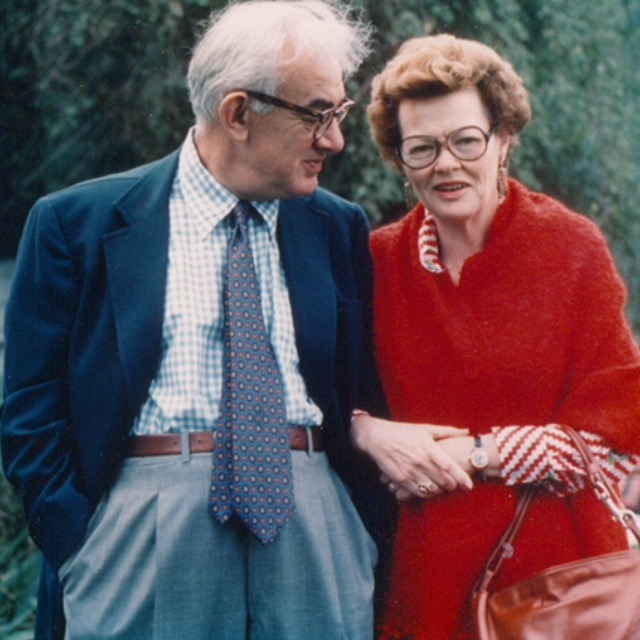
– Dana Susan Lehrman