
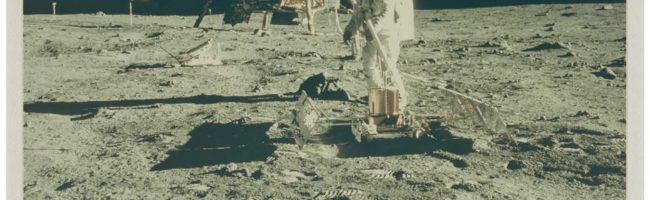
Everyone’s Gone to the Moon

Sunday, July 20, 1969. “The Eagle has landed.” Hard to believe that it has been fifty years since we heard those words! Yes, I remember watching the moon landing, but my story about it has more questions than answers. Principally, what was I doing in Cambridge that weekend?

It was the summer between my freshman and sophomore years of college, and I was living in Washington, D.C. with my sister and brother-in-law. They had recently bought a wonderful three-story house on North Carolina Avenue, so there was plenty of space for me there, in contrast to the previous summer when I had lived with them in a small apartment while workng for the McCarthy campaign. I had a great job at the national headquarters of Planned Parenthood. So why did I go to visit a college friend in Cambridge that weekend? I emailed the friend recently to ask her if she remembered why I came to visit, and she said no. Also, since the actual time of the landing was 4:17 p.m. E.D.T. (thank you, Google, for that information), shouldn’t I have been on a flight back to D.C. by then if I had work on Monday?

These are questions that will never be answered.

My friend was subletting an apartment in Peabody Terrace, Harvard’s married student housing. It was very hot that weekend, and the apartment either had inadequate air conditioning or none at all. One of my most vivid memories is that she kept her pillow in the refrigerator during the day so that it would feel cool on her face when she went to bed. Neither of us can remember how we found out the moon landing was happening that afternoon. We weren’t reading the newspaper or listening to radio or TV news, but somehow we knew. We turned on her small black and white television to watch it. She also called a mutual friend of ours – someone I had previously dated – to invite him over to watch with us. He was not that interested until she told him about this really nitro dope that she had, and then he ran over in record time!

We all got stoned and sat on the living room couch. We watched the module touch down and the astronauts get out. I remember hearing that line “One small step for man, one giant leap for mankind” and thinking that the parallel construction didn’t really make sense, because “man” and “mankind” were synonymous in that context. Later I learned that Neil Armstrong had botched the line, and it was supposed to be “One small step for –a- man…” which would have been much better. (Reading about it now, I see that he says he did say “for a man” and it got garbled in transmission. However, there is some dispute about that.)

I also remember being annoyed (although I’m not sure if it was then or later) that Neil Armstrong got all the glory instead of Buzz Aldrin. Supposedly Aldrin was intended to be the one to go first, but Armstrong pulled rank on him. Buzz Aldrin was a New Jersey boy, and had even gone to Montclair High School, which is in the same town as my high school. We New Jerseyans were very proud of him. It didn’t seem fair that Armstrong received all the attention. Although maybe Aldrin got the last laugh when the movie Toy Story came out, and the astronaut toy was named Buzz Lightyear.

This year my family was lucky enough to have access to some Academy screeners, the DVDs the movie studios send out when they are trying to get Oscar nominations for a film. As a result, we saw some movies we might not have seen otherwise. One of them was First Man, which was about the Apollo 11 mission and the years leading up to it, with Ryan Gosling playing Neil Armstrong. It had not been on my list of movies to see, but we had the screener and my husband wanted to watch it, so Molly and I watched with him during her spring break. It was fabulous, far exceeding my expectations. For my husband and me, it was a reminder of events we had lived through. But for twenty-three-year-old Molly, it was a fascinating look at a piece of history she knew nothing about. I am so glad we saw it, and I strongly recommend it for anyone who is too young to remember the actual mission. Oh I know there are also a zillion documentaries, but I think this biopic might do a better job of capturing their interest.

  • * * * * *

Postscript: Everywhere we look this week the subject is Apollo 11. The Google Doodle today (July 19th) is a four-and-a-half-minute video recreation of the entire mission, from liftoff on 7/16 to the Pacific Ocean touchdown on 7/24, narrated by Michael Collins, the third astronaut, who stayed in the command module while Armstrong and Aldrin walked on the moon. Interesting quote from that video: “We thought our onboard computer was very sophisticated but in fact it had less computing power than what we all carry around in our pockets today.”

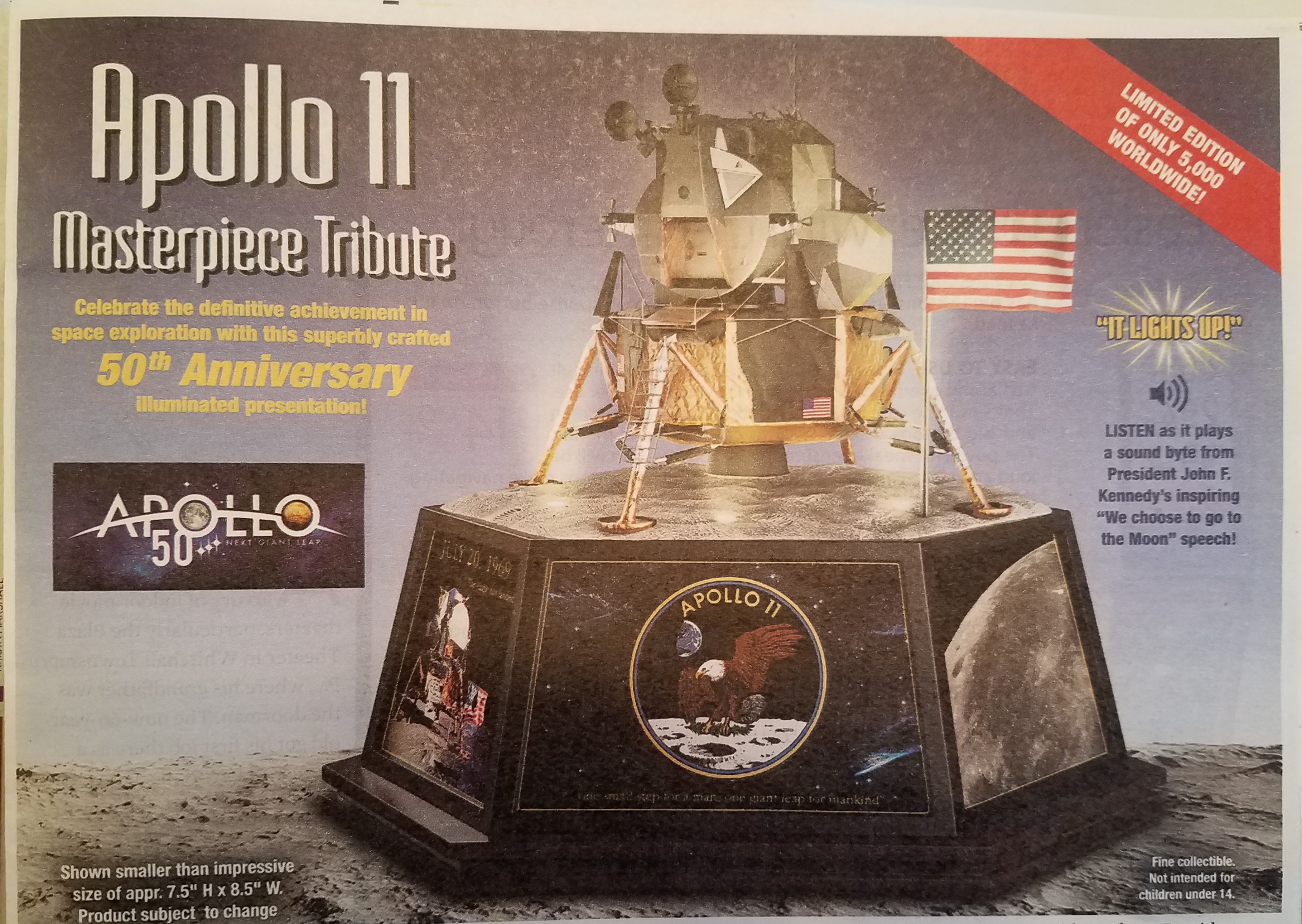
Yesterday, the ad below was in a magazine insert in my local newspaper. I was strongly tempted to buy this limited edition collectible, to give me inspiration while I was writing my story! In case you can’t read the description, it lights up, and it even plays a “sound byte” from President Kennedy’s “We choose to go to the moon” speech. Don’t you wish you had one? It’s probably not too late to order. . . .


Jim and Mara

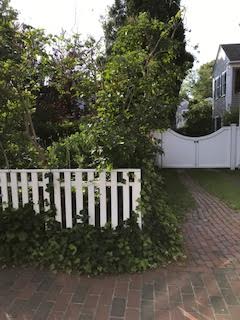
I met her “Becky Thatcher-style”; she was painting the white post fence that separated our properties and I introduced myself. We quickly learned that we were both involved in the art world, she as Director/Curator of the Brattleboro Art Museum, I as a board member of the Rose Art Museum at Brandeis University. She gave me hell for the recent firing of beloved director Carl Belz. I set her straight. I LOVED Carl, had nothing to do with his dismissal, indeed, had co-chaired his going-away party and remained in touch with him. All was forgiven and we became fast friends.

fence separating our properties

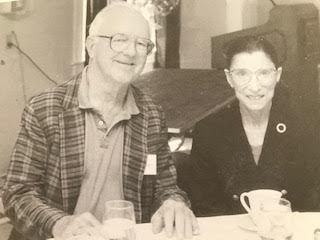
Mara and Jim were not yet married, he was a widower; it was only our second year in our house. Mara would be Jim’s third wife. She was much younger and had never married. She needed a man as smart and intellectual as she was. They both lived in Brattleboro, VT, though Jim was now  Senior Judge, formerly Chief Judge of the Second Circuit Court of Appeals in New York City, so was often there. As the hub of the art world, this was good for Mara too. They were a terrific couple and being a stone’s throw away was wonderful for us as well. We were back and forth all the time.

Mara is warm and engaging; she quickly embraced Jim’s children, step-children, grandchildren and friends. She is a wonderful, inventive cook and exceptional hostess. Jim was thoughtful, brilliant and welcoming. They had a small deck outside their kitchen door where they often sat, abutting my property. No matter who was there, I frequently joined them for a glass of wine or cheese and crackers and great conversation at the end of the afternoon.

If Jim was going over his papers and I was troubled by some current event (thank goodness he didn’t live to witness this political nightmare) Jim could always explain things to me. He made it clear that I wasn’t interrupting and was welcome. He knew the great and the ordinary. In a tribute book, printed when his papers were donated to the Vermont Law School, Ruth Bader Ginsberg is quoted saying that Jim was her favorite dance partner, and she famously loved her husband.

Mara was thrilled to tell me about one of the judges on Jim’s court, named Sonia Sotomayor. She might be coming to the island and Mara would be sure to have me over for lunch if Sonia could make it, but she came in September when I was already off the island. Mara did go to her Supreme Court swearing-in ceremony.

The “welcome” mat was always out. For my children as well, particularly Jeffrey, who’s social difficulties were increasingly apparent. Mara, one of seven children, was marvelous with him. They would play Hang Man. I will never forget the time he stumped her with the word “sphynx”. She still talks and laughs about it. We had them to dinner. They came down from Vermont for Jeffrey’s bar mitzvah and wept through the ceremony, reveling in his achievement. This was real friendship.

Mara opened an important Warhol show at her museum and I picked a date to come see it. I stayed with them in their Vermont home. I sat with Jim as Mara cooked. Over dinner, Jim told me stories of playing bridge with Jack Lemmon at Harvard (Jim was Harvard undergrad and Law School; when David was wait-listed, Jim wrote a glowing letter of recommendation, though David never got off the wait-list). Mara stayed with us in Newton a few times and admired an encaustic painting by a local artist. During World AIDS Day, many of the local art galleries held special shows, with some of the proceeds going to support a local AIDS charity. I arranged to buy a small painting by the same artist, similar to the one Mara admired and gifted it to her. Our bond only grew closer.

Jim grew ill, he was diagnosed with Parkinson’s. Mara tended to him with love and care. We still went over to visit, even as his speech diminished. Some who had previously been close didn’t like to see him in this reduced state. We still loved and respected him. Knowing this, Mara had us over for dinner, as we were not disturbed by Jim’s deficits. We chatted with him, understanding that he could no longer respond. Mara knew it was still good to have people around him. In his last months of life, with a full-time helper, they moved to the Vineyard permanently, as it was easier to be there. Jim knew the terrain well and wouldn’t wander far. They were right in town. He could go get his beloved dish of ice cream daily and have a measure of independence. Everyone knew him, so if he seemed bewildered, he could gently be led home.

I had just returned from a female Sarason cousins trip to the Shakespeare Festival in Stratford, Canada, when Dan, who was on the Vineyard, called and said Jim was in the hospital and failing. I rushed right down. Jim’s family gathered, Mara never left his side. He passed away the night I got back to the Vineyard on October 13, 2007. He was 83. We later drove up to Vermont to attend his memorial service.

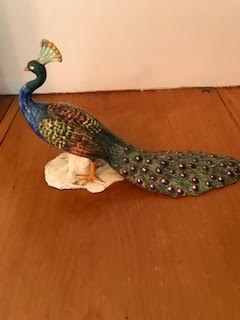
Mara and I remain good friends. She had widow’s benefits to continue using the house and stayed in it for a while. We still went back and forth. We once had a dinner party in my house that she prepared. It seemed like the best of both worlds. We continued to enjoy each other’s company. After a few years, to fund certain trusts established by Jim’s estate, the house had to be sold. As Mara sorted through everything, she came across a pair of ceramic peacocks that had been in Jim’s family for years. She brought them over to me. She knew that “Pfau” means peacock in German and wanted us to have them. They now sit on a shelf in our den with family photos and Dan’s “hole-in-one” golf ball trophy; I look at them daily. I treasure them.

Mara now comes for the month of July, staying with a different, generous friend, who rents close by. She remains the life of the party, always well-informed, caring, reliable. She remarried a few years ago, to someone her own age, who worships her. He comes to the Vineyard when work allows. She walks her dog every morning and sends a text to her group of close friends, inviting us to gather for coffee at around 8am and “share the love” at Espresso Love (the local coffee shop). Those of us who can, do. It is an hour of delight to gather with this wonderful woman, my friend, Mara.


Why I Missed the Moon Landing

I never actually saw the moon landing on television until long after it happened. On July 20, 1969, my husband and I were on what turned out to be a once-in-a-lifetime, eight-week trip to Europe, Greece, and Israel. We had a vague notion that American astronauts had walked on the moon by looking at photos in Italian newspapers. Two days earlier, when Senator Ted Kennedy drove his car off a bridge on Chappaquiddick island, killing 28-year-old passenger Mary Jo Kopechne, we also noticed pictures on the front page of papers in Florence newsstands. Neither story seemed real to me at the time as I attempted to piece together what had happened by looking at the pictures published in the Italian press. Not being able to read Italian made it challenging. But for me, these events were forever connected.

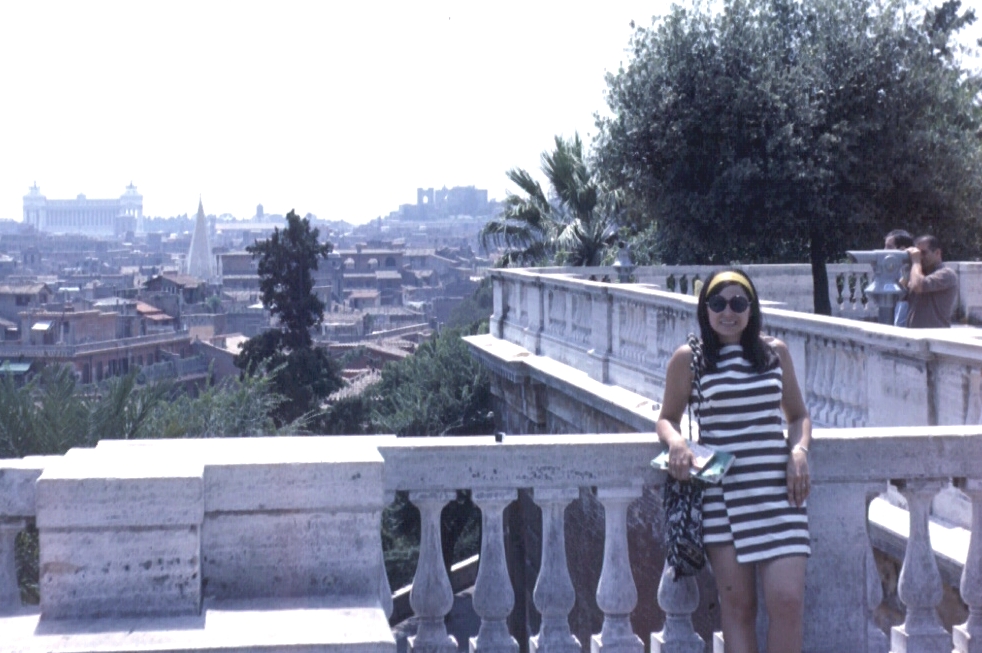
Carefree in Naples, July 18, 1969

I vividly remember the space race that was part of the Cold War with the Russians. When the USSR launched Sputnik in 1957, Americans were devasted and humiliated. Our educational system was criticized for not being able to produce scientists capable of putting a satellite into orbit first. On April 12, 1961, the Russians beat us again when cosmonaut Yuri Gagarin became the first man in space.

It was in May of 1961, when I was in high school, that our new, young president, John F. Kennedy, made his famous moon-shot speech to Congress, in which he asked for financial support for the goal of putting a man on the moon. This was the one part of the space race where we had a chance of beating the Russians. In September of 1962, JFK spoke to a large crowd at Rice Stadium in Houston Texas to drum up popular support for the Apollo program, with its goal of landing a man on the moon.

“But why, some say, the Moon? Why choose this as our goal? And they may well ask, why climb the highest mountain? Why, 35 years ago, fly the Atlantic? Why does Rice play Texas?… We choose to go to the Moon in this decade and do the other things, not because they are easy, but because they are hard; because that goal will serve to organize and measure the best of our energies and skills, because that challenge is one that we are willing to accept, one we are unwilling to postpone, and one we intend to win, and the others, too.”

A little over a year later, Kennedy was assassinated in Dallas, Texas on November 22, 1963, but the Apollo project continued partly as a memorial to JFK. Ironically, the man Kennedy defeated, Richard Nixon, was president when Neil Armstrong stepped onto the surface of the moon and proclaimed, “That’s one small step for man, one giant leap for mankind.” Trying to figure out what was happening from Florence, Italy, I may as well have been on the moon.

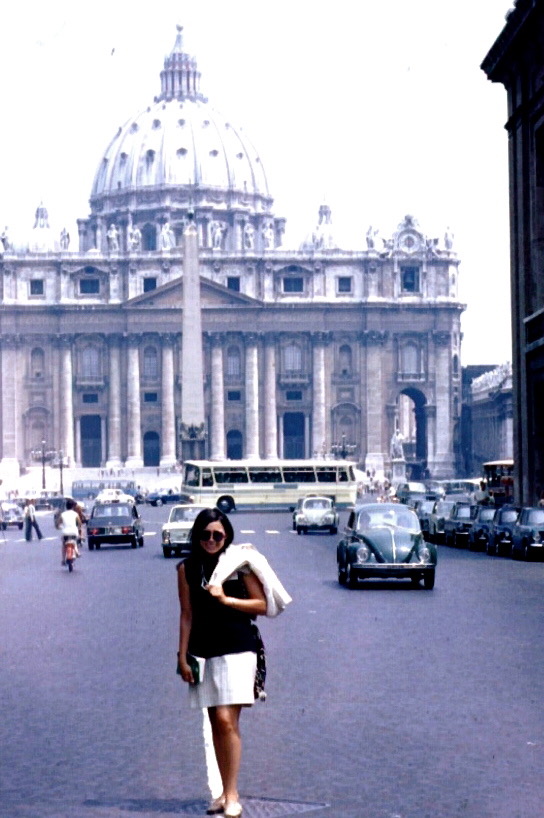
July 26, 1969 at the Vatican

For some reason, the Ted Kennedy disaster was a big deal in the Italian press. I guess even back then, a juicy scandal upstaged putting the first man on the moon. Thus, these two events were linked in my mind. Chappaquiddick represented the end of having a Kennedy as president again. Bobby had been assassinated a little over a year earlier and now Teddy had disgraced himself. His story was still making headlines when the moon landing, which was his brother’s legacy, happened.

I wish I had been in America on July 20, 1969, so I could have experienced the wonder of what we had accomplished with others who viewed it live on television. Instead, my husband and I traveled to Pisa the next day and took the obligatory photo in which we appeared to be holding up the leaning tower. At the time, we were blissfully uninformed about the details of landing a man on the moon. By the time we went to Greece and Israel, it was all yesterday’s news. No one seemed to be very interested.

The Manson murders happened August 9-10 when we were in Mykonos. We also missed Woodstock, spending those days in the Jordan Valley, Sea of Galilee, Nazareth, and traveling by bus to Jerusalem. By the time we returned to earth (or Chicago) on August 26, 1969, the moon landing felt like a surreal event.

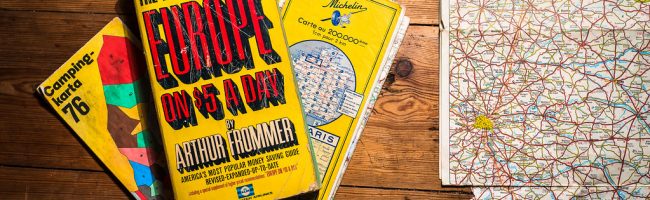
Forgive me if I will always remember the moon landing as part of the summer we got away from all things American, both the good and the ugly. The summer of 1969 was the trip of a lifetime for a young married couple. We spent $1,600 of our wedding money and actually managed to stay within Frommer’s Europe on $5 a Day budget. We celebrated our first anniversary marveling at the Chagall windows in Jerusalem. Although we missed the moon landing, we were over the moon sharing our amazing journey.

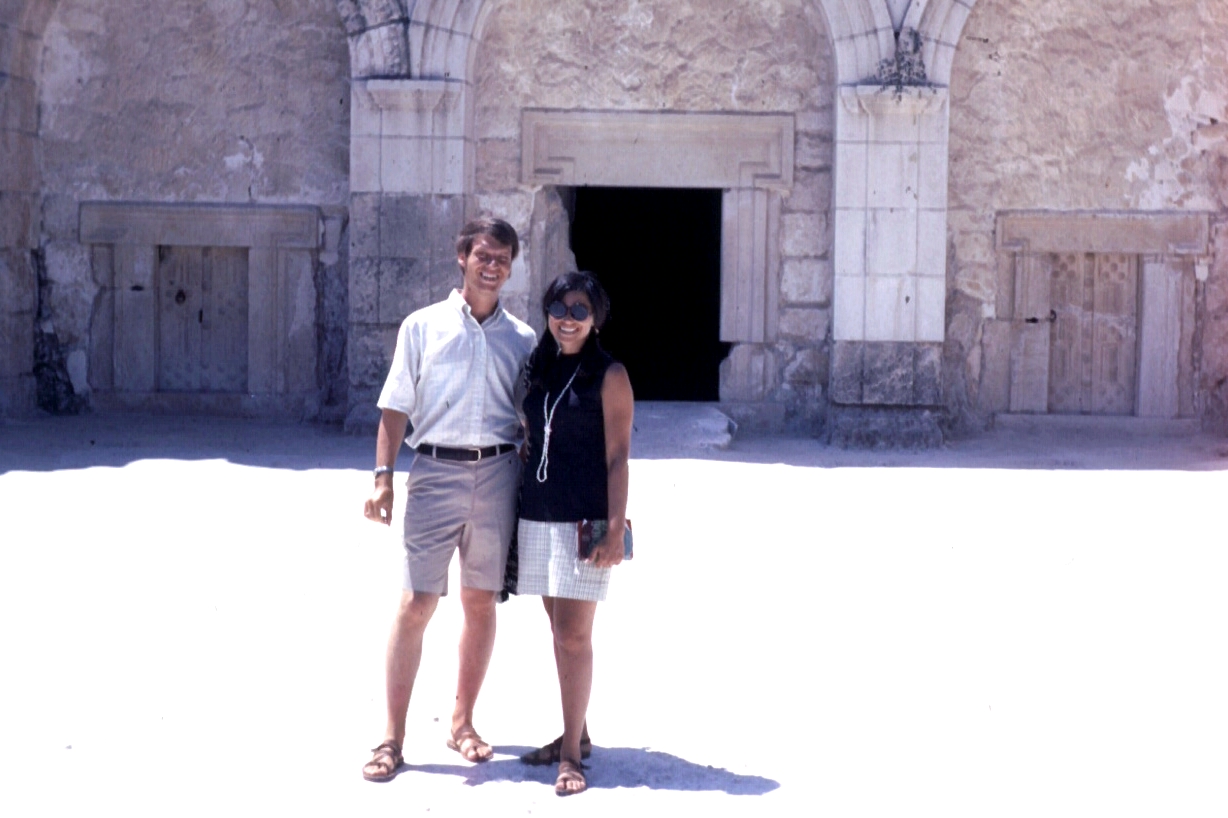
August 16, 1969 at Bet She’arim

I invite you to read my book Terribly Strange and Wonderfully Real and join my Facebook community.