With Gratitude: Mean Girls

While gaggles of kids talked and laughed at lunch, I found a quiet corner and savored my solitude as I ate my sandwich alone. Thanks to a thoughtful custodian who unlocked a room for me, I could avoid being seen; I spent my period of exile in silent, and sometimes salty, contemplation.
Read More

Those were the days….

Fifty cents an hour: That’s what I got for pulling weeds from a brick patio and clay tennis court, which I was also expected to water and roll.  My employer: my father.  Still, it felt good — to actually earn my weekly allowance.

photo by Test Prep Seminars
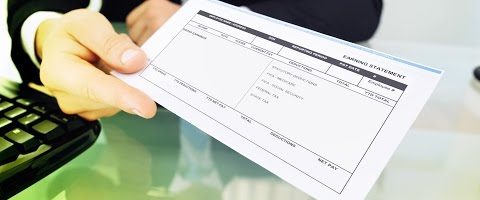
But what felt even better was to be paid by a “real” (non-family) employer, which meant a serious-looking check, compete with tax withholding.  That happened when working construction in the summer of 1962, I believe it was.  That check each Friday gave meaning to suffering through the sticky hot heat of nailing shingles on a seemingly endless roof all week. I guess my pay of $1.25 gross an hour was the minimum wage?

For about the same hourly wage, over the course of summers in high school and college, I also would: life-guard, pitch hay bales, paint farm fences, flip hamburgers, dig post holes, pick berries, and nail new street numbers on houses in my small town after the local government came up with its first comprehensive address system.

After college, in the Army, as a reluctant draftee, I believe my paycheck was equivalent to about $100  monthly.  But, of course, I got free room and board!

After the Army, my first “real” job was a reporter for United Press International (UPI).  When the father of my bride (a business executive who had graced the cover of “Fortune”) asked how much I made and I told him $85 a week, he replied:

“Why, that’s just above the poverty line for two people!”

Mrs. Madison

When I was five years old, my grandmother got me a Saturday job with her neighbor, Mrs. Madison. My job was to help collect eggs and feed the chickens. I scattered grain and filled the water cans. I didn’t collect eggs from any hens that pecked at my hands. I did carry the basket, but only until it became too heavy with eggs. When we finished collecting, we ‘candled’ the eggs for signs of embryos and sorted them for size. I was pretty good at sorting for size.

As a young girl, Mrs. Madison had polio and her left hand was drawn into a tight curl. But her arm was strong–she could carry a basketful of eggs over her wrist and she seemed capable of anything. She liked me.

When the Helms Bakery van came by, the driver blew his whistle and slowed enough for people to get their nickels and come out. The back of the van had long drawers that pulled out, revealing donuts, bread, pies and cakes. I liked the jelly-filled and Mrs. Madison would squeeze her little red plastic clamshell, offering it to me to remove two nickels. I got to pay the driver. Donuts were a luxury at my parent’s house.

I had a cold glass of milk and Mrs. Madison had coffee. About that time in the morning, people in the neighborhood came by to pick up eggs. Everyone joined Mrs. Madison in praising my work ethic. She paid me a quarter.