I knew what they were doing, they were helping me out, but they were doing it in a way that allowed me to feel as if I were also helping them out.
Read More
Chafing at “Charity”




I knew what they were doing, they were helping me out, but they were doing it in a way that allowed me to feel as if I were also helping them out.
Read More
I hope the preschoolers we taught remember that charity begins in our hearts and in the way we treat one another.
Read More

My father was the youngest of eight children, my mother, the youngest of four and I am their youngest. That makes me the youngest in a large generation of cousins, some old enough to be my own parent. We are a diverse group of people, yet we all get along, have each others’ backs and genuinely care about each other. I suppose we were raised to be that way.
Our grandparents were the immigrant generation, and, at least in my mother’s family, there was some family feud and one part didn’t speak to another part. I don’t buy into such nonsense and more than 25 years ago, reached out to second cousins who I didn’t know growing up (though one lived in my neighborhood and went to the same high school), introduced myself and said, “let’s get over this”. We did and, much to my delight, have been friends ever since.
I wrote about my father’s brothers and sisters in The Sarason Clan. You can read about the parents of my diverse cousins in that story. One of my father’s brothers even converted to Southern Baptist to marry the woman he loved. Both his daughters married ministers, so that was in the family too. But we were taught to accept it. We were bound by our blood relationship. On that side of the family there were 19 first cousins in all, though many are now deceased. We had a writer, an IBM salesman, a nurse, a physical therapist, a rabbi, a PhD mathematician, and many others covering a wide range of professions. We are all unique personalities, but we actually enjoy getting together and turn out when invited to weddings and b’nai mitvot. One of my Baptist cousins came to my children’s b’nai mitvot and even wore a Jewish star out of respect for her ancestry. Hers is the first Christmas card I receive every year.
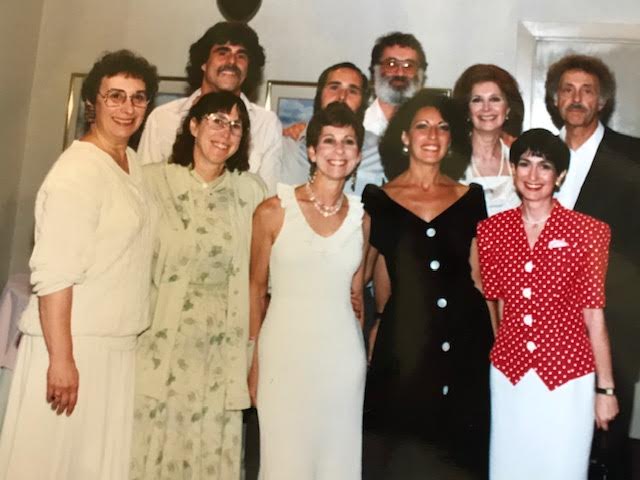
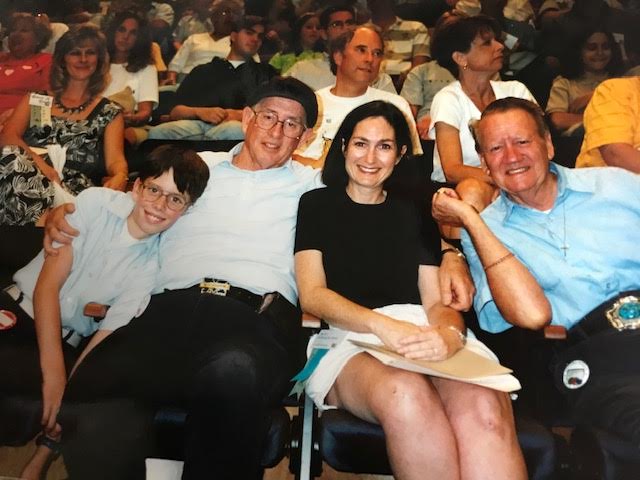
Here are some of us at Mimi’s (in the black) daughter’s bat mitvah in suburban Kansas City 18 months after my father passed away in 1990. It was the first time I’d been with a large group of my cousins and I felt nurtured and cared for. At the beginning of the torah ceremony, the family follows the rabbi, holding the torah aloft and parades it through the congregation. I had never seen that before (now it is common practice, but I hadn’t seen it at the time). I began to weep, seeing that beautiful family altogether, aching for my father. My cousins immediately held me close, comforted me and told me I came by the tears naturally; both my father and Ike (Mimi’s father) were weepers. This helped me so much and validated me.
I was always closest to my cousin Connie, seen with me in the Featured photo at her granddaughter’s bat mitvah. I was the only out-of-town cousin invited, as I have always been very close to her family. I was the 6 year old flower girl at her wedding. She lived a few miles away and this was the long bike ride I would take when I couldn’t stand being in my own home. I would just go and hang out with her and her three sons, all younger than me, but we’d have fun together.
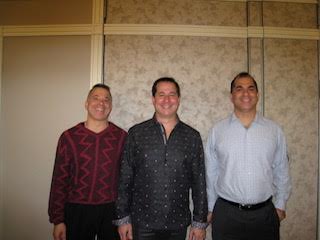
Connie’s sons
In 1966, my dad won a sales incentive trip to Palm Springs for himself and my mother. Connie’s family took me in for ten days (Rick was a Freshman at Brandeis). Her husband drove me to school each morning, many miles from their home. Their children were little, the boys close in age to one another, as much as 10 years younger than 13 year old me, and a little wild. I wasn’t used to such behavior, but watched them rampage through my room with wonder and amusement. I helped get them to bed. I brought the results of my Home Ec class back to Connie (pineapple upside down cake, as I recall). Gordon even took me to Sunday School. His boys were too young to go yet. For those days, I was part of the family. I became so for life. Even now, when I visit Detroit, for part of each visit, I stay with Connie. She has been my surrogate mother most of my life.
I wrote about my adoration of my cousin Alan in my story Action Jackson. He already lived in Geneva, Switzerland by the time I was born. He was exotic and fabulous. He came to visit his parents, my dad’s oldest sister Pauline, many times a year and we would all get to visit him, so I grew up feeling like I knew him. He passed away at the age of 50 in 1981. I was heartbroken, but stayed in touch with his widow, Sissi, a Viennese beauty close to my age. She and her children (she remarried after Alan’s death, so in addition to her son Gregory, has two daughters) wound up in London. Alone, I went to Vienna to celebrate her 60th birthday in 2008, hosted by her sister.
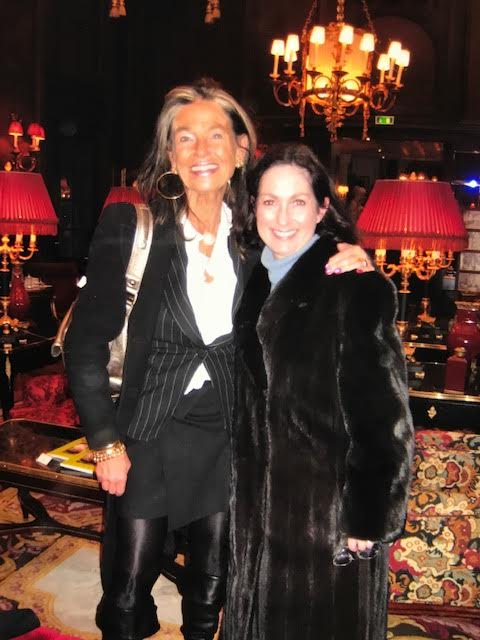
Sissi’s 60th in Vienna
I remain close to Alan’s son Gregory, also living in England and try to see him when I visit my son in London. I was particularly honored when he and his beautiful bride asked me to do a reading at their wedding three years ago. There was a good representation of cousins from the Jackson side of the family (my father’s sister) who traveled in for the wedding and here we are at brunch the next morning. 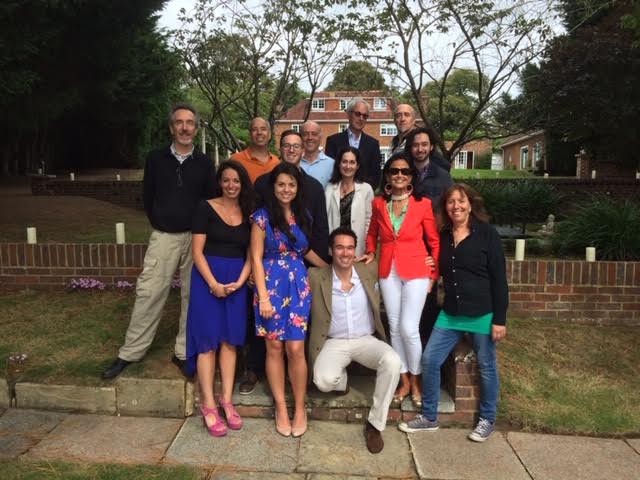
It was good to be together.
On my mother’s side, the cousins are fewer and less diverse. There are 7 of us in total and we are teachers, counselors and doctors. And still, I am the youngest. Lois, my oldest cousin and my mother were pregnant at the same time. Her son is 21 days younger than I am, though he is one branch down the family tree from me. We were always invited to each other’s parties (I do have a really cute photo of me dancing with David at my 13th birthday party, which was held at a dance studio; that was a thing then).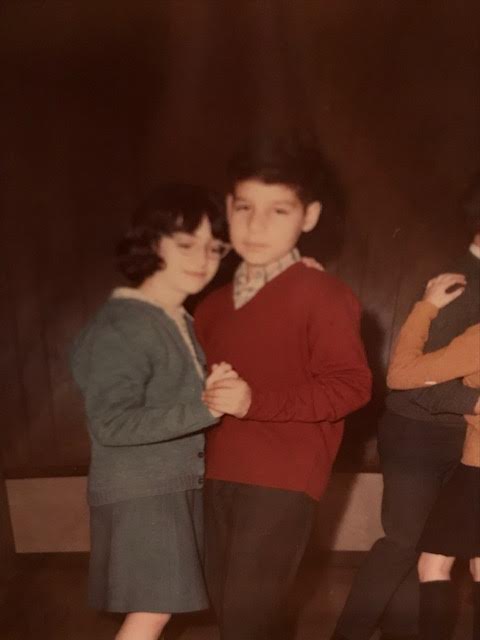 But we didn’t really become friends until we were adults. He is the other cousin I always stay with when I visit Detroit. He and his wife have always been most gracious to me; she took care of my nursing baby during my father’s funeral; I was distraught. It was a kindness I will never forget and can never thank her for enough.
Though my cousins are much older, they have always been very good to me. The women “mothered” me. The men took a while to realize eventually that I was a grown-up, take me seriously and treat me as their equal; their wives have always been wonderful to me.
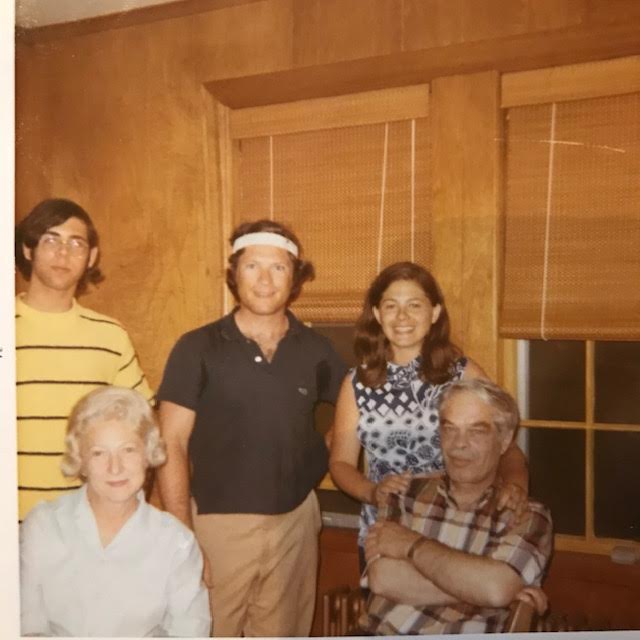
During my four years at Brandeis, my cousin Dick did his internship and residency at our fine Boston hospitals. He went on to become one of the world’s experts in Barrett’s esophagus. With wife Linda, they were great surrogate parents, having me over when Brandeis took off several days for the High Holidays and I couldn’t go home, coming to see me in my shows (they couldn’t quite believe their eyes when they saw their little cousin in “The Devils”, topless in the final scene). Linda even hosted a shower of my college friends during my engagement my senior year and joined my parents for my graduation celebration in May, 1974, so I have always felt a great kinship with them. Here they are with my Aunt Stella, Uncle Herman (Dick’s parents) and their cousin Fred Sampliner, who attended Babson College, in May, 1971, shortly before I went home at the end of Freshman year.
Here are most of the first cousins at one’s granddaughter’s bat mitzvah, minus our oldest cousin, a few years ago. My brother, Rick, is on the right.
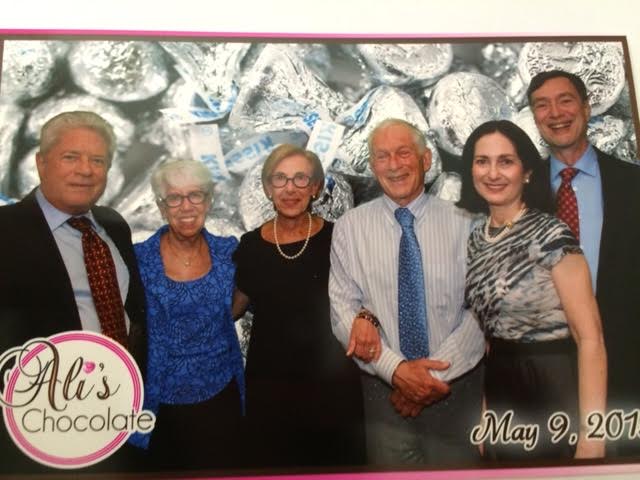
We don’t have many chances to see one another, as some of us live far away, but we do enjoy getting together and we all care deeply about each other. In the above photo, I am wearing our grandmother’s pearls, which I inherited from my mother. I cherish them. Our grandfather owned a jewelry store in Toledo, OH. His son Joe worked there and took it over after his death. The other two women in the photo are his daughters. The woman is blue, my cousin Helene, has a daughter and grandson in Boston. Several years ago, she and her husband (I was a 12 year old Junior Bridesmaid in her wedding), bought a condo in Newton and spend part of the year here now to be close to their grandson, with the added benefit, that I get to see more of her too.
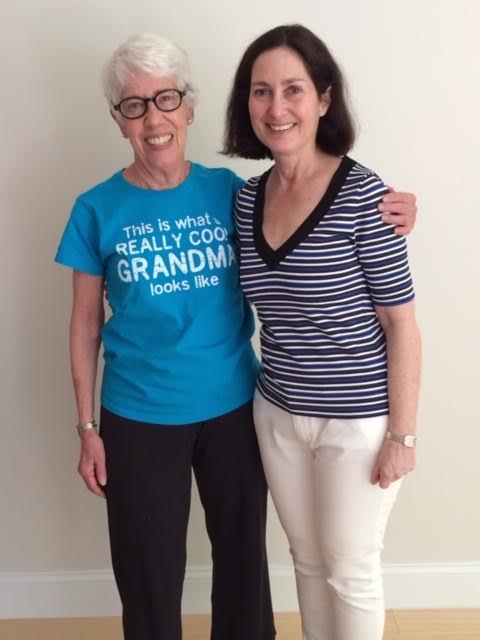
Mother’s Day, 2014
This story goes live three days before my 67th birthday and I am the youngest of the clan. My cousins are aging. Many of their grandchildren are out of college. I can only say how much I love and appreciate all of them. I wish I could see them more often, but we are spread out across the country, indeed, in some cases, even international. The Internet has made communication a bit easier, but I miss seeing them on holidays or family get togethers. I draw strength from them. As the generations increase, the bonds weaken. The branches of the family tree don’t know one another. I seem to be the family historian. I want so much for us to know one another and continue to feel the love I carry for all of my family, that was instilled by our parents. Our parents taught us to value family, to take care of one another, no matter how different we may be. I think these are wonderful lessons to carry on. They seem more relevant today than ever.
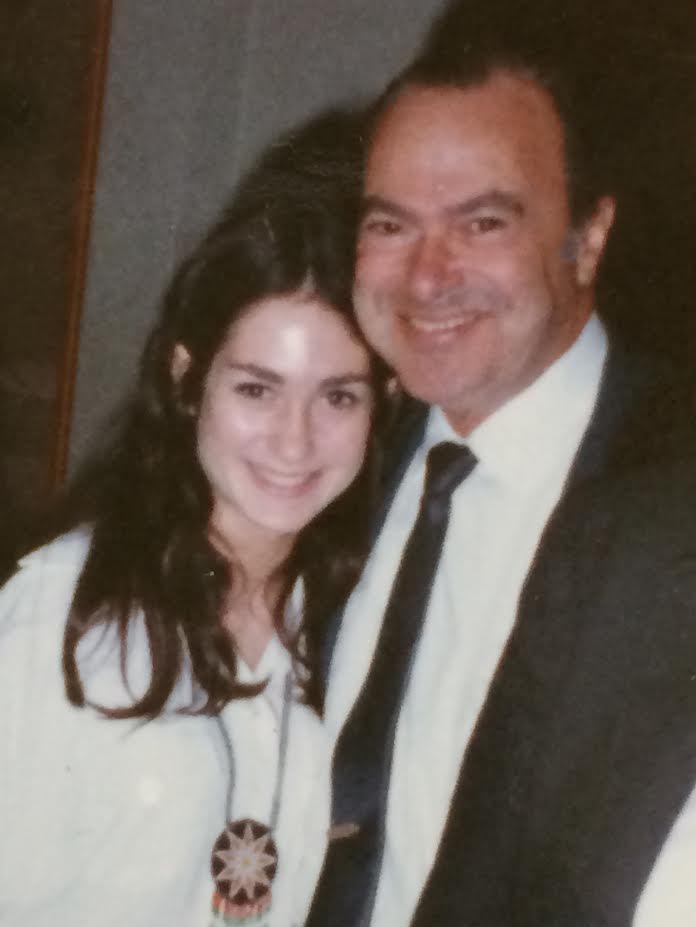
Dad and Me
Oct, 1969
Among the bedrock principles of Judaism are “repairing the world” and “doing righteous deeds”. These inform the imperatives for social justice and charitable activities, so practicing Jews heed these and find ways to do meaningful work.
My family became more involved in temple life as my brother, five years my elder, approached his bar mitzvah. My father became treasurer of our temple and we went to services almost every Friday night (in those days in the Reform movement, services were ONLY held on Friday nights, not on Saturday mornings. The movement has swung back toward a more traditional version of the religion in the almost 60 years since then). This was the beginning of our family awakening to those principles.
My mother was always involved in Jewish women’s social justice groups: National Council of Jewish Women, Hadassah, ORT, Brandeis University National Women’s Committee. These groups had a social element to them, but also raised money for their organizations (needy local Jewish families, hospital in Israel, the Brandeis library, etc). So as a child, I saw both my parents involved in Jewish outreach and charitable work. The example was laid out before me.
During the summer of 1970, while I visited cousins in Ohio, my esteemed uncle, Meyer Prentis, retired treasurer of General Motors, passed away. Upon returning to Detroit, my father took me, alone, to pay my respects to his widow and daughters, my father’s first cousins. It was the summer before I left Detroit for Brandeis, in Massachusetts, and my father was proud of the young woman I was becoming. Aunt Anna was in bed, prostrate with grief, supported by her four daughters, peers of my father’s. Others were in the house, as shiva was still being observed. I was 17 years old. Alone, I was brought into the bedroom to see Aunt Anna and her daughters. She sat up in bed and greeted me wanly. Her daughters, each old enough to be my own mother, were warm and pleasant to me. They knew I was off to Brandeis in a few weeks and wished me well. I was the only person allowed into Aunt Anna’s room that evening.
As Dad and I drove home that evening, he again expressed how proud he was of me, then did something he had never done before, but would become the hallmark of our relationship for the rest of his life. He took me into his confidence (which meant that I could and would reciprocate; a closeness I cherished). He had interviewed for, and was certain to become the first ever Director of the Endowment Fund for the Jewish Welfare Federation in Detroit. He was excited to move away from the automobile business, where he had spent his entire life, use his business skills elsewhere and (as he said that night), “do good while making good”. He went into philanthropy. The notion of estate planning, particularly, planned giving for charitable institutions, was brand new at the time. My father was a pioneer. He charted a path and set an example for me that I have embraced my entire life. He was happy in his new career for the remainder of his working life.
I have done much volunteer work throughout my life, but singled out the two institutions that I believe formed me to give much of my time and charitable contributions. Those are: the Interlochen Arts Center (which encompassed the National Music Camp, a place I attended for six summers during a formative period of my life) and Brandies University, my alma mater, and that of my husband and brother.
With a close friend, I began visiting camp during the summer of 1975, a year after graduating college and marrying. Together, we visited for ten summers. During one such visit, our dear friend, Dude Stephenson, director of Intermediate and High School Operetta and our mentor, asked Christie if the Playboy Foundation could fund an operetta scholarship. Christie was the CEO of Playboy. She told Dude that the Foundation funded First Amendment pursuits, not arts camps scholarships, but we went back to our cabin that night (I believe it was about 1979) and discussed it. We thought we could get a group of friends together and fund a half scholarship. She and I each gave the most money, but we did get a group together and funded the scholarship for the rest of the years that the operetta was performed at Interlochen. We named it the “Pine Tree Wonder” Scholarship, since Interlochen is in a pine forest in northern Michigan, and that was Dude’s nickname for all of us.
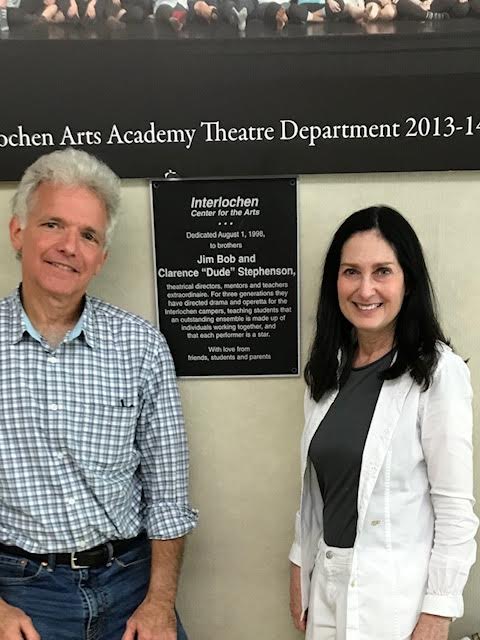
I served six years on the National Alumni Board, four of them as Corresponding Secretary. Shortly before I left the board, the building of a new theater was announced. A friend commented that it would be so nice if we could name something in the building for Dude and brother Jim Bob, who now was Dude’s assistant, but had been the head of University Drama when I was a camper there in the ’60s. So I went to the president and discussed it with him. He said we could name the lobby for the brothers if we raised “X” amount of money. I contacted every operetta camper I knew and I met the goal. The dedication ceremony the next year was marvelous and heart-felt. I gave a wonderful speech full of memories of both men. Here I am with Dude, Jim Bob and Dude’s youngest son at the ceremony in 1998.
Dude taught at camp for generations. We were bereft when we received word of his passing on December 30, 2017. Though always in touch by phone, I hadn’t seen him in years and planned to visit the next summer for his 90th birthday, but was too late. Then word came that there would be a Celebration of Life for him during the camp season and most all our friends came back. I was honored to be one of two alumni asked to speak. While there, with my dance partner from our last operetta together in 1969, we visited Dude’s plaque in the new theater. Expand the photo to read it. I am so proud that I led the fundraising efforts to make that a reality. He meant so much to so many.
At Brandeis, I have given time and money for many, many years. My husband and I gave some sum to the annual fund every year before we focused in on our passions: the Rose Art Museum for me, the International Business School for him (he is an Executive in Residence there). I began working on reunions with my 15th and have worked on everyone since then; I co-chaired my 25th, 30th, 40th and 45th. I was the first class correspondent, serving 11 years in that capacity. I served two years on the National Alumni Board.
My main focus, for thirty years, has been the Rose Art Museum, arguably the finest collection of post WWII art north of Manhattan. I was a founding member of the Young Patrons of the Rose, and from there joined the Board of Advisors, where I have remained for some 22 years (even with term limits). There was a well-publicized crisis during the crash 11 years ago, when the president of Brandeis threatened to close the Rose and sell the art work to bail the university out of financial troubles. This did not happen, but I was asked by the provost to be the Board representative to the “Future of the Rose” committee, to chart its path going forward. I served with integrity, as I do with all my positions. As a Board member, I must give a serious contribution each year.
I served on three Art Councils. The first, chaired by Jon Landau (Bruce Springsteen’s manager) made the recommendation to form an Office of the Arts to coordinate arts activities on campus. This recommendation came to fruition some years later. The third Council, formed by that Director of the Arts, required a substantial annual gift. I was the first person he asked to be on this group and was a member for five years. Our group looked at grant requests coming from the various schools of arts (Fine Art, Theater and Music) and decided, based on how much money we had to distribute, what to fund each year. We funded a visiting professor of photography, the digitization of the slides for the FA department, hiring an artist-in-residence for a theater production, bringing in a world-famous musician to perform on campus. These were the sorts of things our group could provide. It felt like meaningful contributions for the artistic life of students on campus, which has always been so important to me, even as an undergrad, when I majored in Theater Arts, but took several Art History courses.
Shortly after my husband retired in May, 2002, we gave Brandeis some of his zero-basis Accenture stock for Brandeis to sell, and established a Charitable Remainder Unitrust. Though this generates income for us for the remainder of our lives, it is also a significant contribution to Brandeis and in many ways, brings me back full circle to my father and planned giving, as that is exactly what we have done.
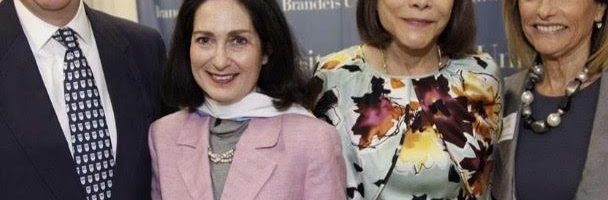
As a way to recognize all that we have given and done (and continue to do) for Brandeis, Dan and I were made “Fellows” of the university in 2015. I was hooded and given a large plaque. That is the Featured photo above, shown with the then-president of the university, the head of development and the head of the Fellows program. I continue to give back and urge others to do so as well. It remains our task to leave the world better than how we found it; now more so than ever.