
The Play Was a Thing

(Please note: I am actually reading, and wish to comment upon, other Retrospect writer’s stories. But for some reason, since early August I am unable to reply to anyone’s stories but my own, no matter where I log in from. All I get is a 503 server error. Until and unless this changes, I will include all my comments in one document and publish that as a story near the end of the week. A slow, awkward kludge, but it’s the only idea I have)

I’ve written enough stories here on Retrospect, and have a poor enough memory, that I often need to go back and check that I am not repeating myself.

I’ve covered the most life-changing performance I’ve attended (Pizza and a Bad Movie).  I’ve written about an epically bad concert that also altered my life’s course (My Brown-Eyed Girl). I’ve shared the concert where I fell in love with the performer (Birthday Girl).

I need something not involving lust or Maria. Oooo… I have one!

Back in the early Uh Ohs I flirted with The Theater. Chicago has a LOT of small theaters and small theater troupes. I took some classes, wrote and workshopped some short plays, and submitted a few. I even took a couple of performance workshops. Nothing came of it and like most of my enthusiasms, it proved less than durable. But I learned a lot, met a few nice people and a few extremely flawed ones, and was exposed to some profoundly brilliant storytelling.

I think perhaps the most memorable (it must be; I remembered it first) was a play called “The Life and Times of Tulsa Lovechild: A Road Trip” by Greg Owens. This was the play that ignited my short ambition to get involved with the theater.

I have always greatly admired writers who weave multiple plot threads and characters into a fabric that at the end is revealed to be a brilliant and complex tapestry. The Simpsons episode “22 Short Films About Springfield” is a nice example. This play is another.

I won’t write a synopsis from 21 years on. The Amazon listing for the script has a nice summary of the plot: https://www.amazon.com/Life-Times-Tulsa-Lovechild-Road/dp/0881452394. A couple of reviews are at https://www.bozemanactorstheatre.org/news/2015/3/29/tulsa-lovechild and https://chicagoreader.com/arts-culture/the-life-and-times-of-tulsa-lovechild-a-road-trip/. You can also order a copy of the play online, preferably from a small bookstore or the like.

Until now I’d quite forgotten about Tulsa. I need to dig up my copy of the script and re-read it!


Watching “Fiddler” with People Who Lived It

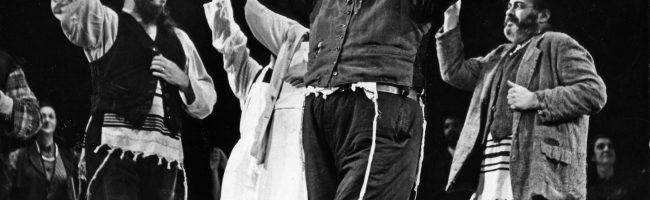
My cousin Annette and I took our grandparents to see Fiddler on the Roof performed at Detroit’s beautiful Fisher Theater. The Google machine tells me this happened prior to the show’s Broadway debut, so it was either in 1963 or early 1964. We were lucky to see Zero Mostel in the role of Tevya. In retrospect, I wonder how much of the show my grandparents understood and wish we had been able to take them to the Yiddish version. Even though they were familiar with its source material, the Yiddish stories of Sholem-Aleichem, their command of English wasn’t great.

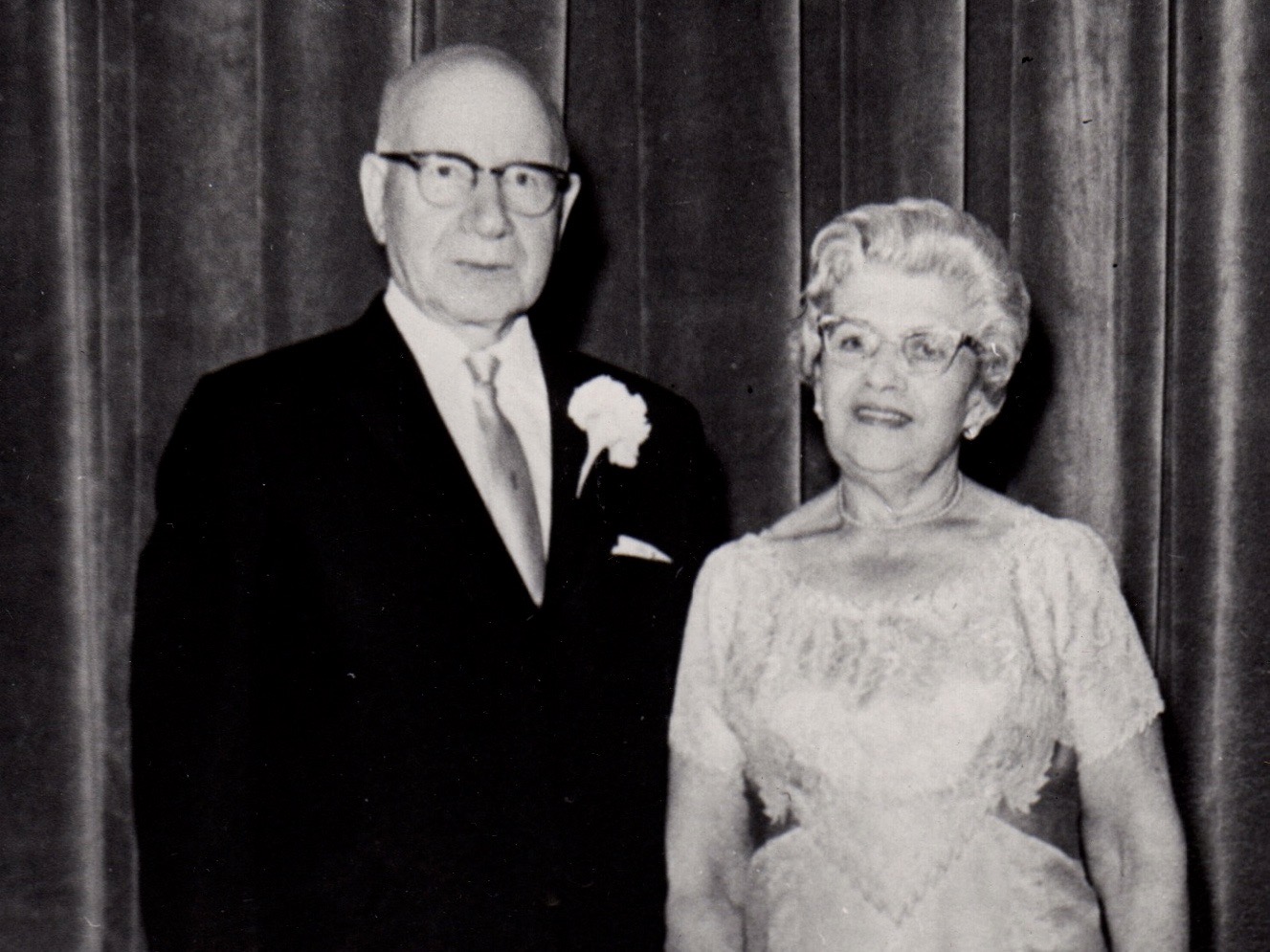
My grandparents around the time we took them to see Fiddler

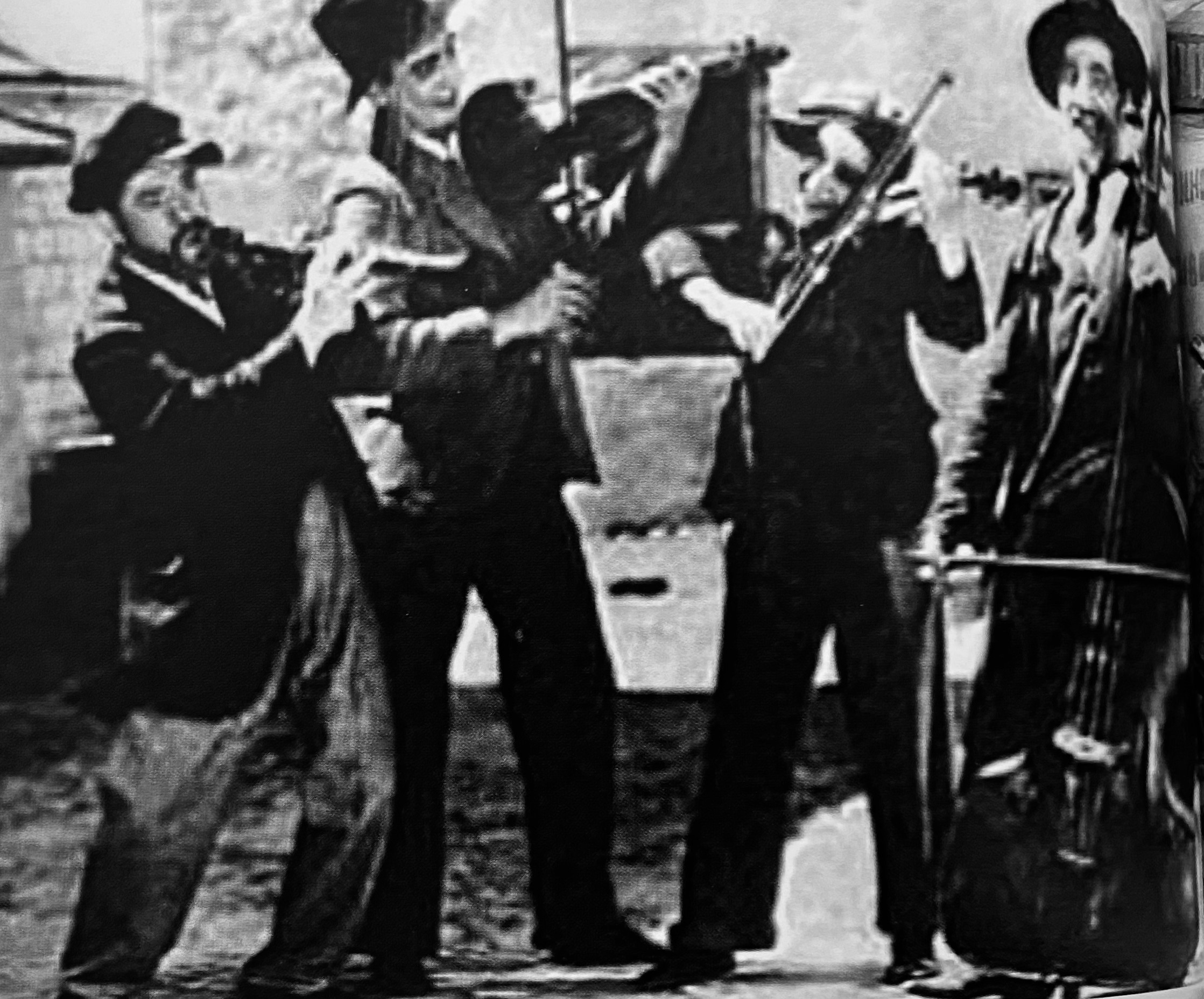
Despite the language barrier, our grandmother Alice was delighted with the performance, even if she didn’t understand all of it. She came from a family of klezmer musicians and her family name Klavir most likely came from the German word for piano, klavier. Music, singing, and dancing were in her soul, right up to the end of her life at age 93. I vividly remember her smiling and tapping her feet to the music throughout the show.

Her klezmer roots

Our grandfather Philip, on the other hand, was a sweet, kind, and quiet man who had been dealt a tough hand in childhood. His mother died when he was young, and his father remarried soon after. Because the family was poor, at age ten he was sent away on his own to Riga to be apprenticed to a tailor. Eventually, he and his older brother and younger sisters came to America. He didn’t really know his half-siblings, some of whom likely were killed in the Holocaust. There was no singing, dancing, and celebrating in his life — only hard work. Thus, he sat stoically through the show and proclaimed when it ended, “It vasn’t like dat.”

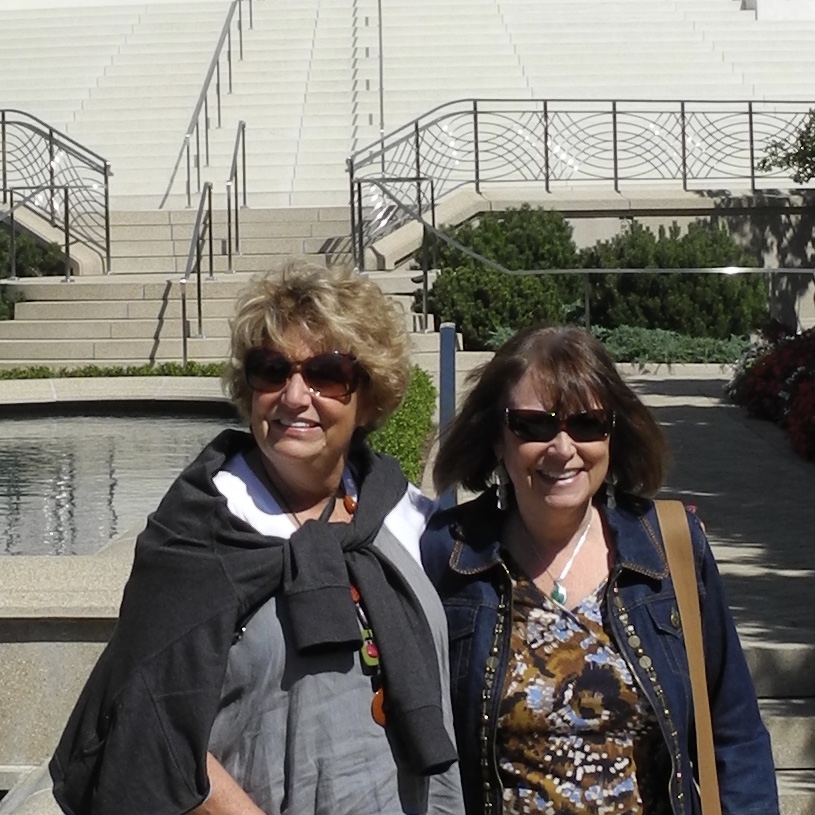
With Annette, now sadly gone

I have seen several productions of Fiddler since that one, including our son’s fifth grade play in which he played Motel the Tailor and sang “Wonder of Wonders” to a cute little girl without making eye contact. I have always loved the show, even though I know it glamorizes the life in the shtetl my grandparents knew. But when I think of that original production with the amazing Zero Mostel, it is with a tinge of nostalgia and sadness, remembering how I shared this experience with my grandparents and cousin. With my grandparents’ passing, much of the tradition that Tevya sang about during the musical is lost, as faded from history as the pictures below.

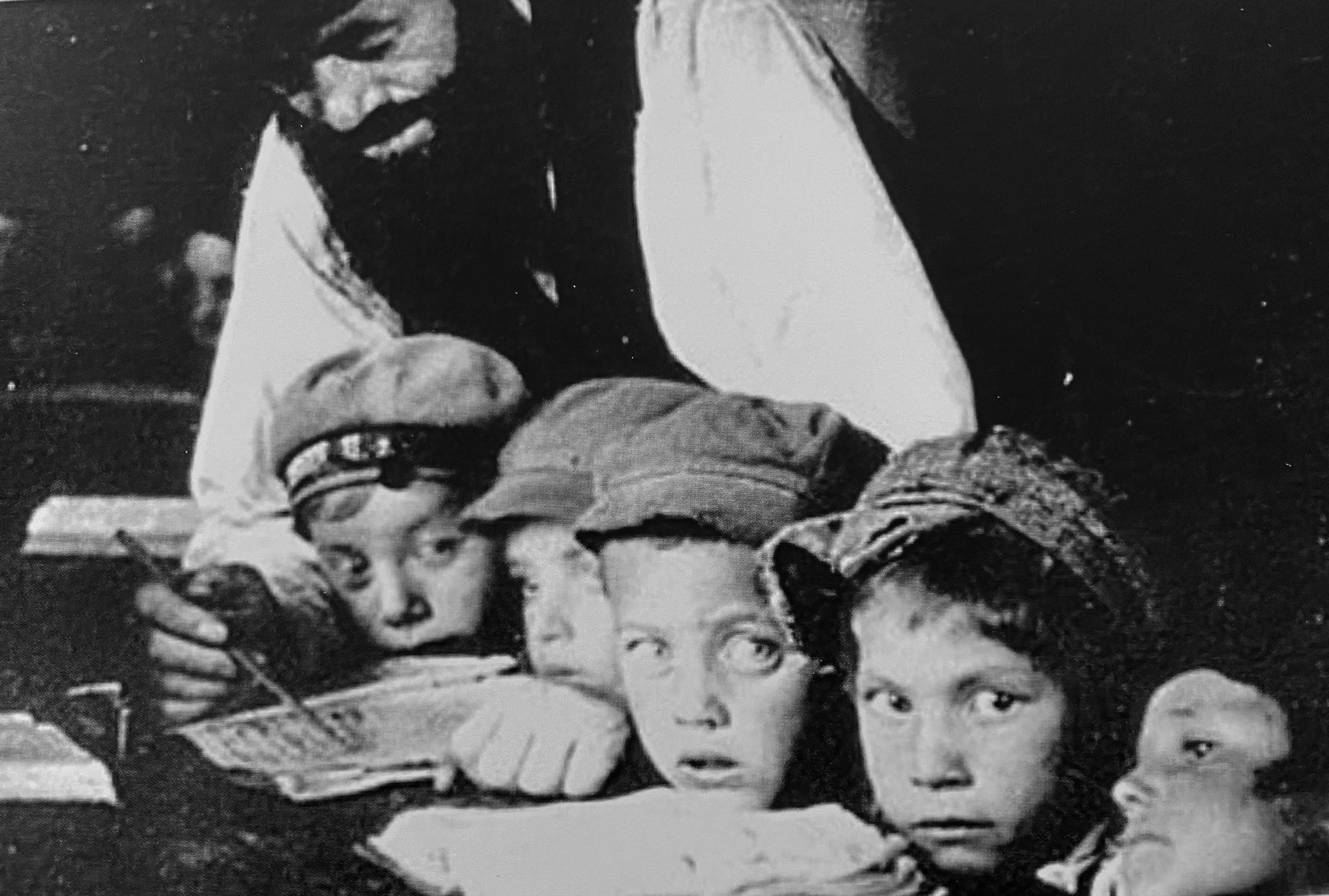
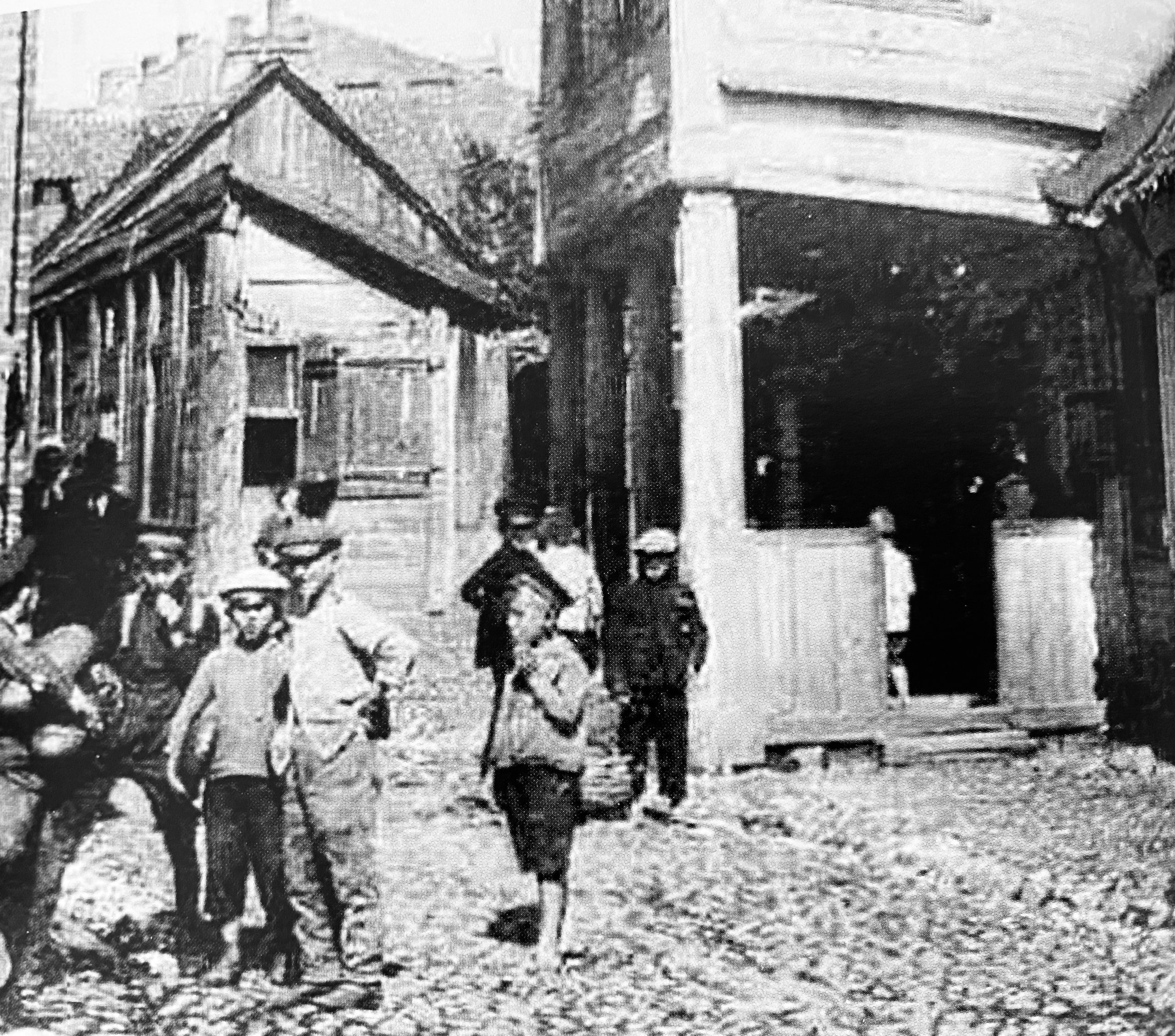
As my grandfather would have said, it was more like this:

Cheder (school for boys only)


Shtetl street scene


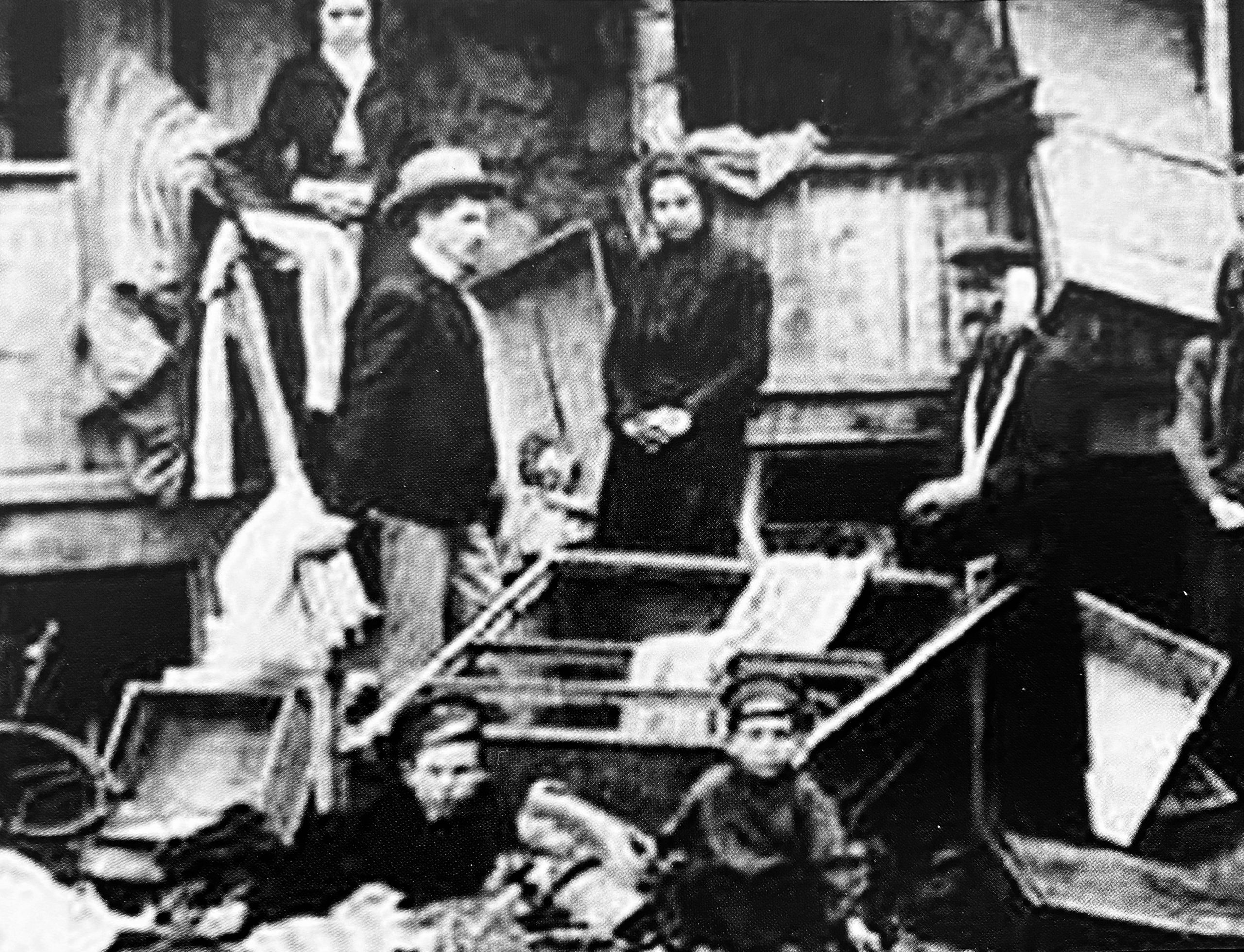
After a pogrom, an organized massacre of Jewish people in the shtetl