In June of 2007, David graduated from Stanford and Jeffrey moved up from 8th to 9th grade; a full-fledged high schooler. We felt a family trip was an appropriate way to celebrate and asked Jeffrey where he’d like to go.
“Japan”. “Where else?”, we queried, just in case that didn’t work out. “No where; just Japan.”
Jeffrey was fascinated with animé, had taken rudimentary Japanese that year and was intrigued by the culture. Dan contacted a high-end travel company who laid out a few itineraries for us. We chose one, got the quote, which blew us out of the water. Couldn’t do it. Dan remembered that having an American Express Platinum card came with services including travel arrangements. He gave them the itinerary set out by the other company. They came back with a quote half as expensive for the same trip. We booked through them.
David graduated on June 17, 2007; Father’s Day. This was Stanford’s custom and many joking speeches were made about the best Father’s Day gift was no more tuition payments.
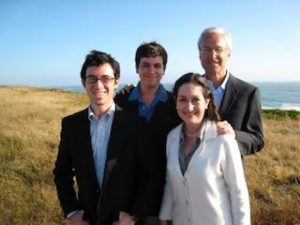
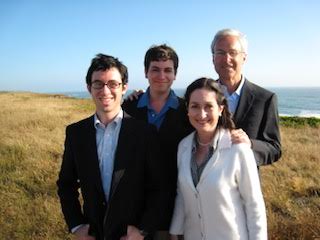
Post-graduation dinner at Half Moon Bay Ritz
We celebrated our new graduate’s achievements that evening with dinner at the Ritz at Half Moon Bay and left for Japan the next day.
Just as in “Lost in Translation”, we stayed in The Tokyo Park Hyatt, a very sleek hotel. Though groggy from our travels, we wandered through the hotel with awe and checked out the gorgeous amenities, including the swimming pool where Scarlett Johansson and Bill Murray had cavorted.
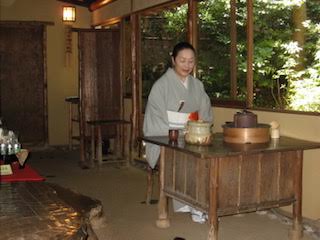
On Wednesday, June 20, we met our first guide who took us to the Tokyo Tower where we had panoramic views of the sprawling city. She led us to the Imperial Palace Plaza where we witnessed an elaborate tea ceremony and sampled the tea after.
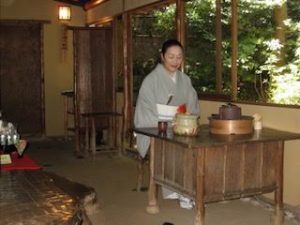
tea ceremony
Food was a big issue. Even though Jeffrey requested this trip, he had an extremely limited palate and only really liked beef, which was a scarce and expensive commodity in Japan, so our guides chose restaurants carefully to oblige him. We had a lovely barbecue lunch at the New Otani Hotel followed by a visit to the Asakusa Kannon Temple, a cruise down the Sumida River and a drive through the Ginza District, which seemed very touristy.
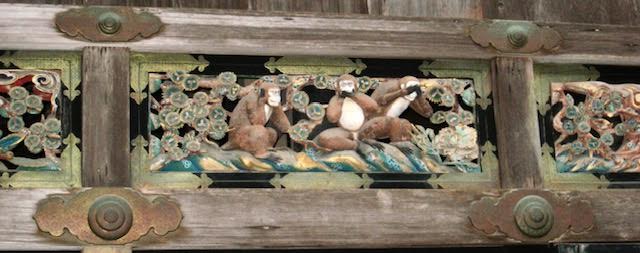
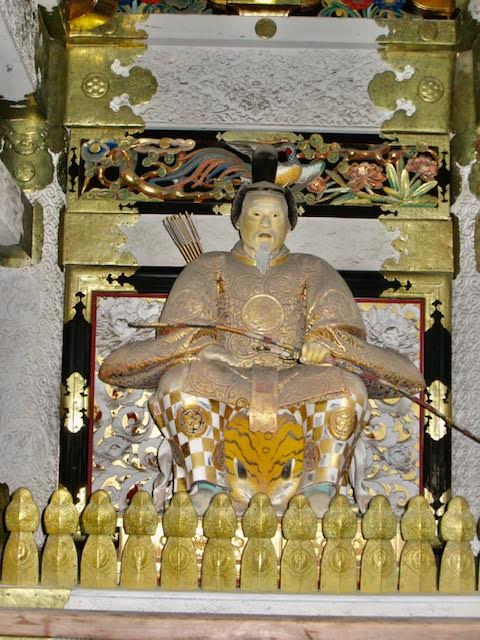
The following day we visited Nikko, famous for the Toshogu Shrine. One of the beams above the entrance has the famous three monkeys embedded in the carvings. This is the origin of the “hear no evil, speak no evil, see no evil” symbols.
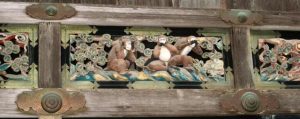
Monkey carving
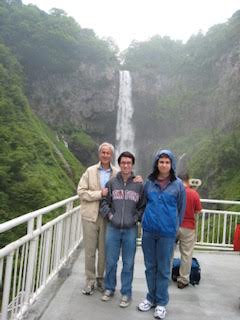
We continued up the zigzag path into the mountains to see the Ryuzu Waterfall.
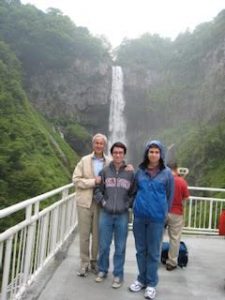
That night, we ate Shabu Shabu at a restaurant in our hotel. Jeffrey had heard about it and wanted to try it. One gets the slender slices of meat and boils them in a pot, sort of like fondu (but not cheese), and you have dipping sauces. It is entertaining and tasty.
The next day we were on our own. The kids could read a bit of Japanese and got us through various subway stops. They were much braver than we were. We visited the National Museum. The department stores were amazing! Floors and floors of designer clothing and gorgeous baked goods (we are not souvenir seekers, so didn’t buy anything). We headed off to the Shibuya District – Times Square on steroids; so many lights and electronics stores. That night we ate at a teppanyaki restaurant in the Roppengi District. It was very chic, but so hard to find that our cab driver had a tough time; swearing at us in Japanese under his breath. Here, one picked the meat by the quality of beef and how many grams you wanted. It was priced accordingly. Wow!
Jeffrey later squealed on David. After we were all in bed, David had snuck out and gone back to see the night life in the Shibuya District. Well, he was a recent college grad, used to doing his own thing. I couldn’t blame him for that.
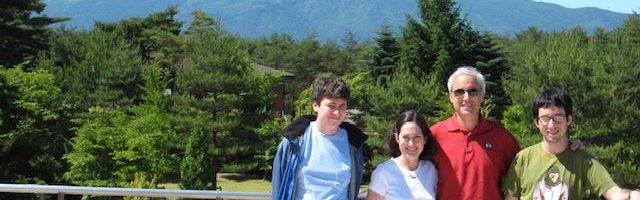
With our private driver and guide, we ascended to the 5th station of Mt. Fuji on June 22. It was a perfect day. Our driver even snapped a photo. He said, “Fuji is like a shy woman who only shows herself occasionally”. A very Japanese comment. Our lovely guide took the Featured photo with Fuji in the background, which is often hidden in fog, but not this day. We then hiked part of it. It truly was a picture-perfect day. We followed with a boat tour of Hakone, buffet lunch at the Hakone Imperial Hotel and a cable car up to Mt. Komagatake where the views of Mt. Fuji and Hakone National Park were spectacular.
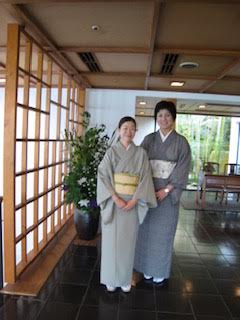
We continued on to a ryokan, or traditional Japanese bath house/spa. In this case, it was Gora Kadan, which had been the former summer residence for one of the Imperial families. The women who worked there were all dressed in beautiful, traditional garb.
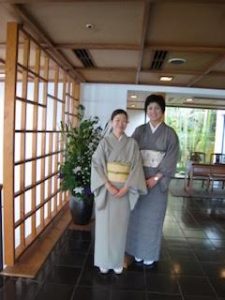
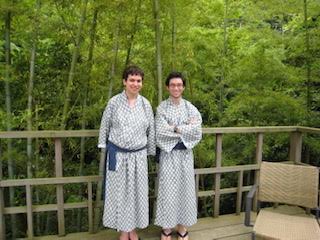
We slept on Tatami mats, wore Yukatas and clogs, and took ritual baths (men and women were separate, but the assignments for the baths switched at 3am; I don’t know how they now deal with non-binary).
There was a process to the bath. One had to thoroughly clean oneself with soap and water, sitting on a low stool, before entering the communal bath (always nude). The baths are warm and soothing.
We had a traditional Japanese dinner (in a private dining room, served by a beautiful woman in a silk kimono) featuring such items as cold tofu custard, sea urchin with soy sauce jelly, slightly grilled Ainame trout, tuna, Ayu smelt from kanogawa river, ( for dessert): grape jelly with green tea sauce. We really did try…
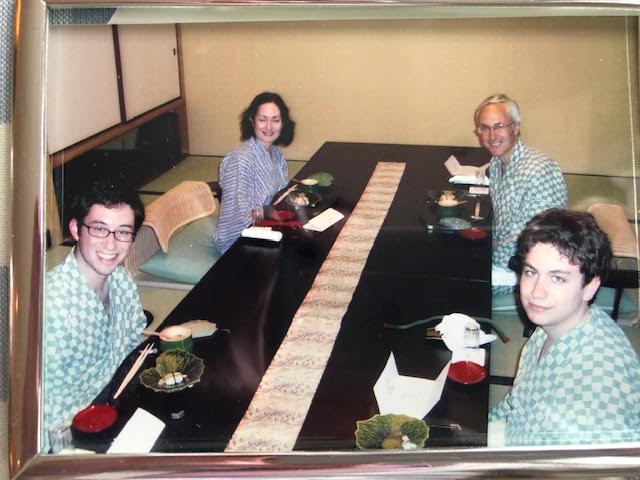
Our server took a souvenir photo of us (we’d been to the baths already). When I awoke at 4am, there was nothing else to do, so I went to the bath again. Why not?
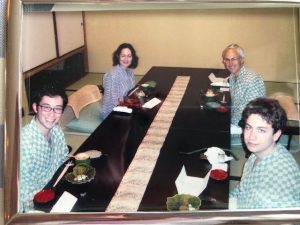
Photo taken at the Ryokan
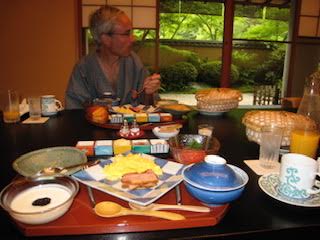
But in the morning, we had a “western-style” breakfast; everything they thought we might like was served; various types of baked goods, yogurt, eggs, cereal, juice, coffee, tea; much more than we could eat. David tells me that waste is not part of their culture, so they must have thought poorly of these stupid Americans. We paid dearly for this luxurious experience.
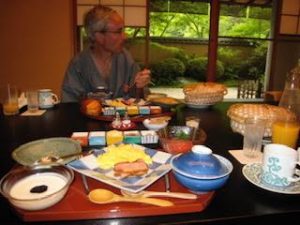
So much food!
David and Jeffrey looked great in their Yukatas (which is just the cotton robes we wore; not a splendid kimono). That was my holiday photo that year.
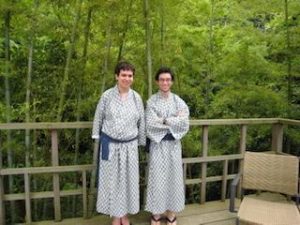
We continued on to a day of sight-seeing in Hakone, which included some strange sights like a Meissen museum (fine German china, which we collect for our Vineyard house). We did not expect to find that in Japan. We finally said good bye to our excellent guide and took the bullet train to Kyoto, where we were met by our new guide.
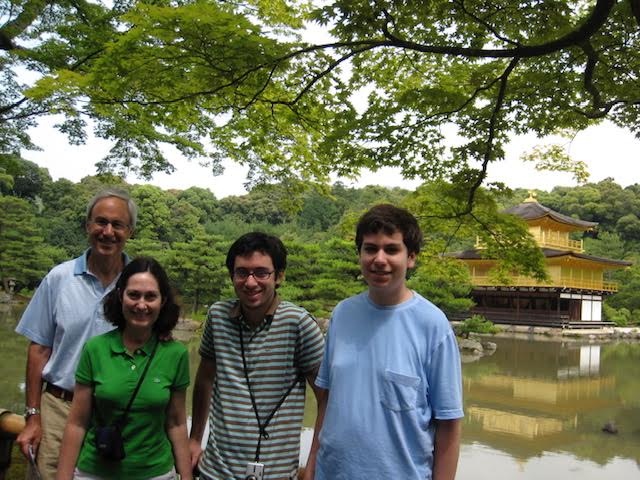
Kyoto is a cultural heritage site. It was not bombed during WWII because of its significance and beauty and we saw many wonderful sights just driving through the old, crowded streets. It is known for the Golden Pavilion, as seen in the background of this photo. Every place has some sort of pond or reflecting pool of water to add to its beauty.
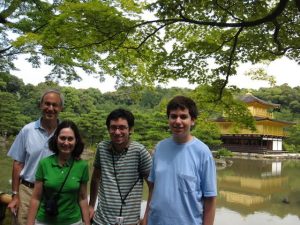
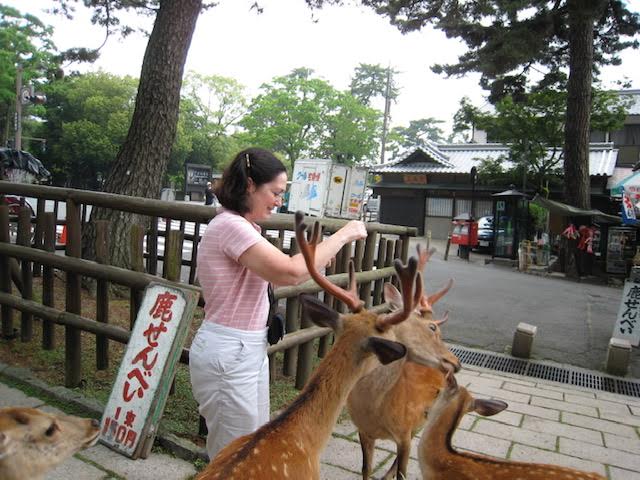
The next day, we drove on to Nara, the old capital of Japan, where the famous tame deer reside. I purchased some cookies to feed them. When I ran out, I held up my hands to show I had no more and they stopped begging for food. Really something.
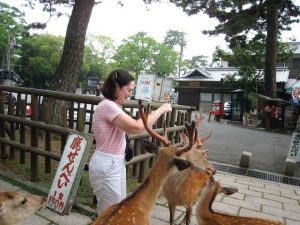
We saw the Golden Buddha, in Todayi Temple and Kasuga Taisha Shinto Shrine, both memorable sights.
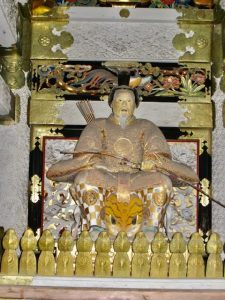
Huge golden Buddha
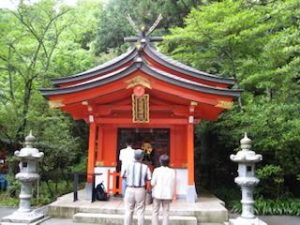
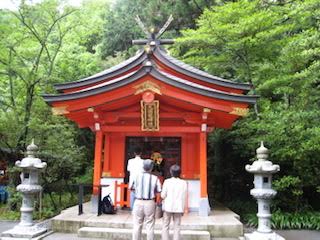
Shinto temple
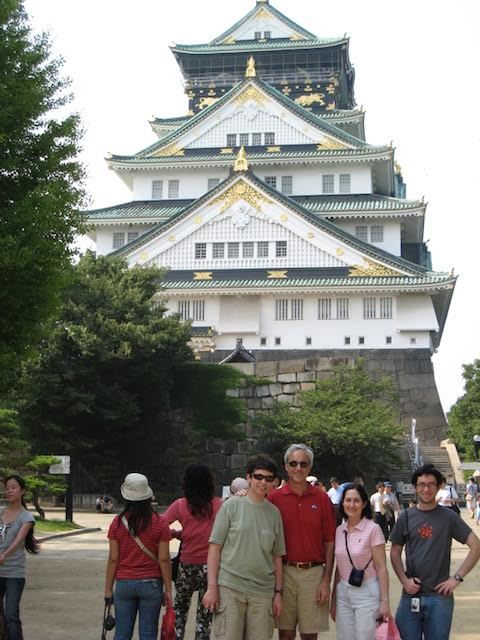
We were close to Osaka and visited there as well. We saw the important sights like the huge Osaka Palace
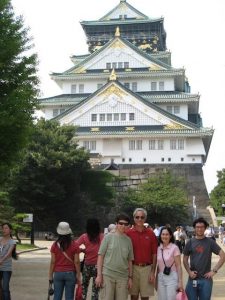
Osaka Palace
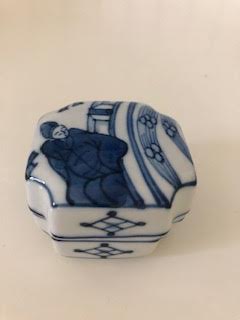
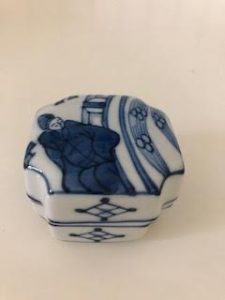
and did some shopping. There we bought a few souvenirs; a small ceramic box that I keep on my dresser on Martha’s Vineyard.
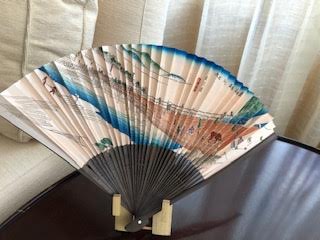
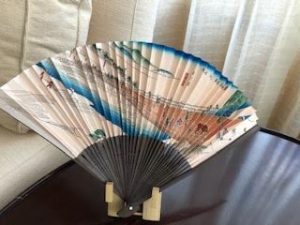
A fan that adorns a table in my house in Newton.
Bullet train back to Tokyo for our final night in Japan. There were many places we did not see (Hiroshima comes to mind), but we felt like we came away with an appreciation for the culture and heritage so very different from our own. We flew back with a stop over in San Francisco. It helped to lay over for a day. The jet lag is a killer.
We had the trip of a lifetime with photos and memories to cherish forever. Doing it with our children was very special. They knew a bit of the language, which helped us, but they also were interested in more adventure, had a different perspective, fewer feelings about WWII, loved the hustle and bustle of the electronics districts. At least David wanted to try everything. It was wonderful to explore a different culture with the whole family.